
There was once a man who bought an island and refused to turn it into a resort. He planted trees instead. He protected what was fragile instead of monetizing it. He chose preservation over profit. In a world that measures value in square meters and return on investment, he measured it in shade, in birdsong, in the slow movement of time.
Croatia understands that philosophy.
Not loudly. Not commercially. But deeply.
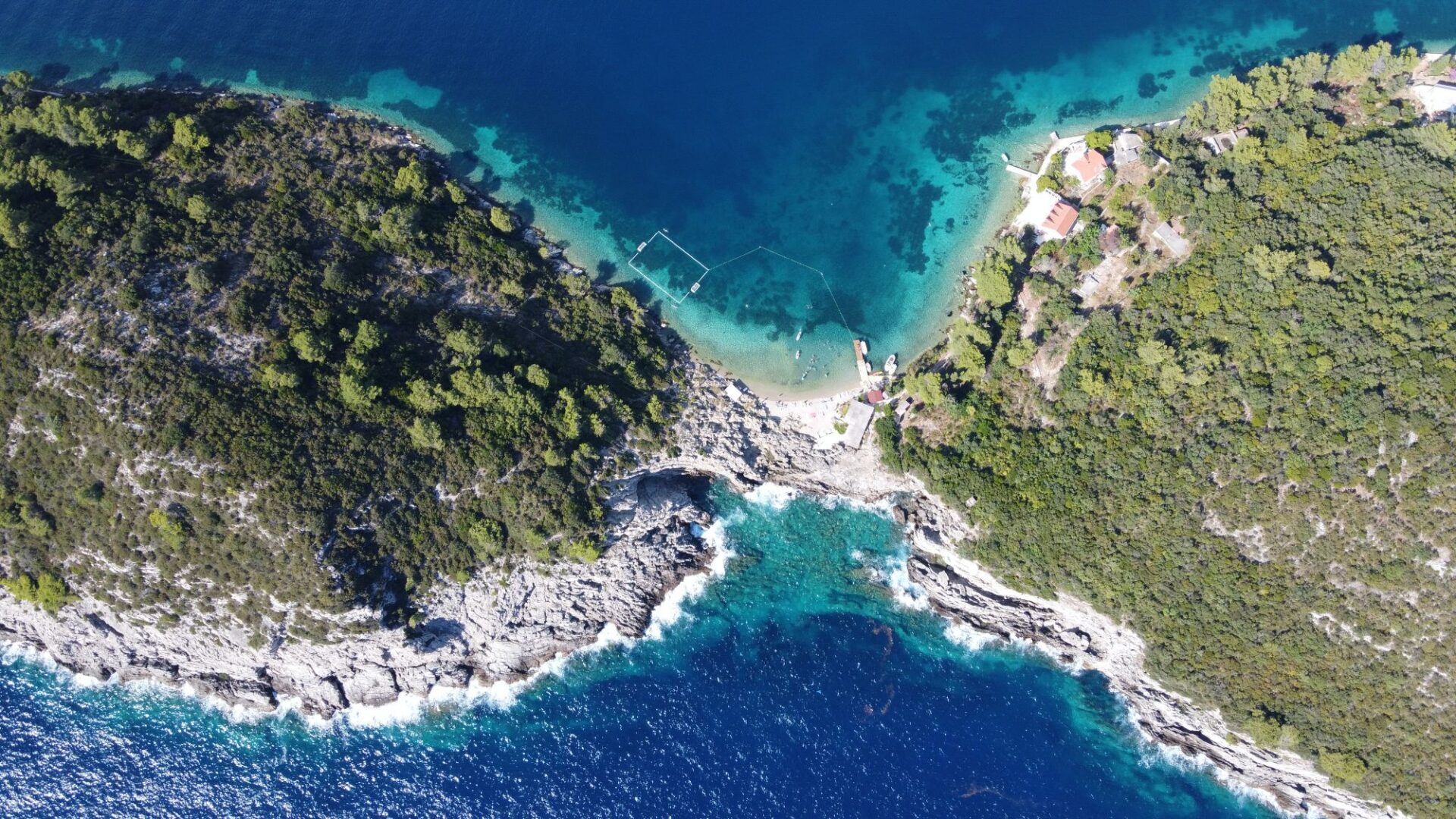 Along the Adriatic coast, more than a thousand islands rise from the sea like fragments of light. Some are known. Many are photographed. A few are whispered about. And then there are those that remain quietly themselves — unpolished, unamplified, deliberately restrained.
Beyond the polished marinas and summer headlines, Croatia still hides places where there is no beach club soundtrack and no architectural spectacle competing with the horizon. Pine forests descend untouched into translucent coves. Dry-stone walls trace the memory of centuries. Small harbors fall silent after sunset, surrendering to wind and tide.
Here, silence is not emptiness.
It is presence. And it is rare.

The true luxury of Croatia
Yet the true luxury of Croatia is not found only on its islands.
On the mainland, the same philosophy survives in landscapes shaped by patience rather than urgency. In the hinterland of Dalmatia, stone villages rest beneath vast skies, surrounded by olive groves and karst fields that change color with the seasons.

In Istria’s interior, hilltop towns rise above vineyards and truffle forests where mornings begin in mist and end in candlelight. In Slavonia, endless plains breathe slowly, far from the choreography of coastal summers. In Lika and Gorski Kotar, forests stretch deep and green, interrupted only by waterfalls and the quiet movement of wildlife.
These are not places that demand attention.

They reward it.
The most discerning travelers no longer seek excess. They seek integrity. They want to know what remains untouched, what is protected, what will still exist decades from now. Through CROATIAN ATTRACTIONS, journeys are designed with this understanding — not to conquer the landscape, but to enter it respectfully. Private passages across lesser-known waters. Walks through protected national parks at unhurried hours. Encounters with winemakers, olive growers, and fishermen who see themselves not as entrepreneurs first, but as custodians.

Because the Loudest Luxury Is Silence
There are Croatian islands that quietly refused to become resorts. There are valleys and villages on the mainland that never agreed to become spectacles. Their restraint is not accidental. It is cultural. It is generational. It is a decision repeated, season after season, to preserve character over convenience.
Prestige once meant visibility. Today, it means discernment.
The choice of a secluded cove over a crowded shoreline. A wooden boat over polished chrome. A terrace lit by lanterns instead of amplified light. A sky dense with stars instead of artificial glow.
Croatia still offers this — not as a marketing concept, but as a living reality.
The question is no longer where to travel next.

Travel as Legacy
It is what kind of traveler one chooses to be.
Those who shape the future of destinations are the ones who understand that expansion is not always progress, and that silence is not something to be filled. Some landscapes survive because someone, at some point, decided not to build.
Croatia still hides such islands.
Croatia still shelters such inland sanctuaries.
And for those who seek meaning rather than noise, that is the loudest luxury of all.


