A City That Greets You Like an Old Friend
Some cities impress you.
Others slowly reveal themselves.
Zagreb does both.
During my first month as a student here, I discovered that Croatia’s capital is not a place you simply visit—it’s a place you feel. Elegant Austro-Hungarian façades glow in the soft morning light, café terraces hum with conversation, and hidden corners reveal stories that stretch across centuries.
What surprised me most was how intimate Zagreb feels. Despite its rich history and vibrant culture, it welcomes you like a friend who has been waiting patiently to show you their favorite places.
And on a crisp February morning, I had the perfect introduction.

Following the Stories of Zagreb’s Guides
On February 21st, I joined a special free walking tour of Zagreb’s historic heart, organized by the Association of Tourist Guides of Zagreb to celebrate International Tourist Guide Day.
Established in 1990 by the World Federation of Tourist Guide Associations, the day honors the professionals who transform cities into living stories.
Because that’s what great guides do.
They don’t simply show monuments—they reveal secrets, connect moments in history, and breathe life into the streets you walk through.
Our guide did exactly that, leading our small group through Zagreb’s Upper Town and Lower Town, where every step felt like turning another page in a beautifully illustrated book.

Where Zagreb’s Heart Begins: Ban Jelačić Square
Every journey through Zagreb begins here.
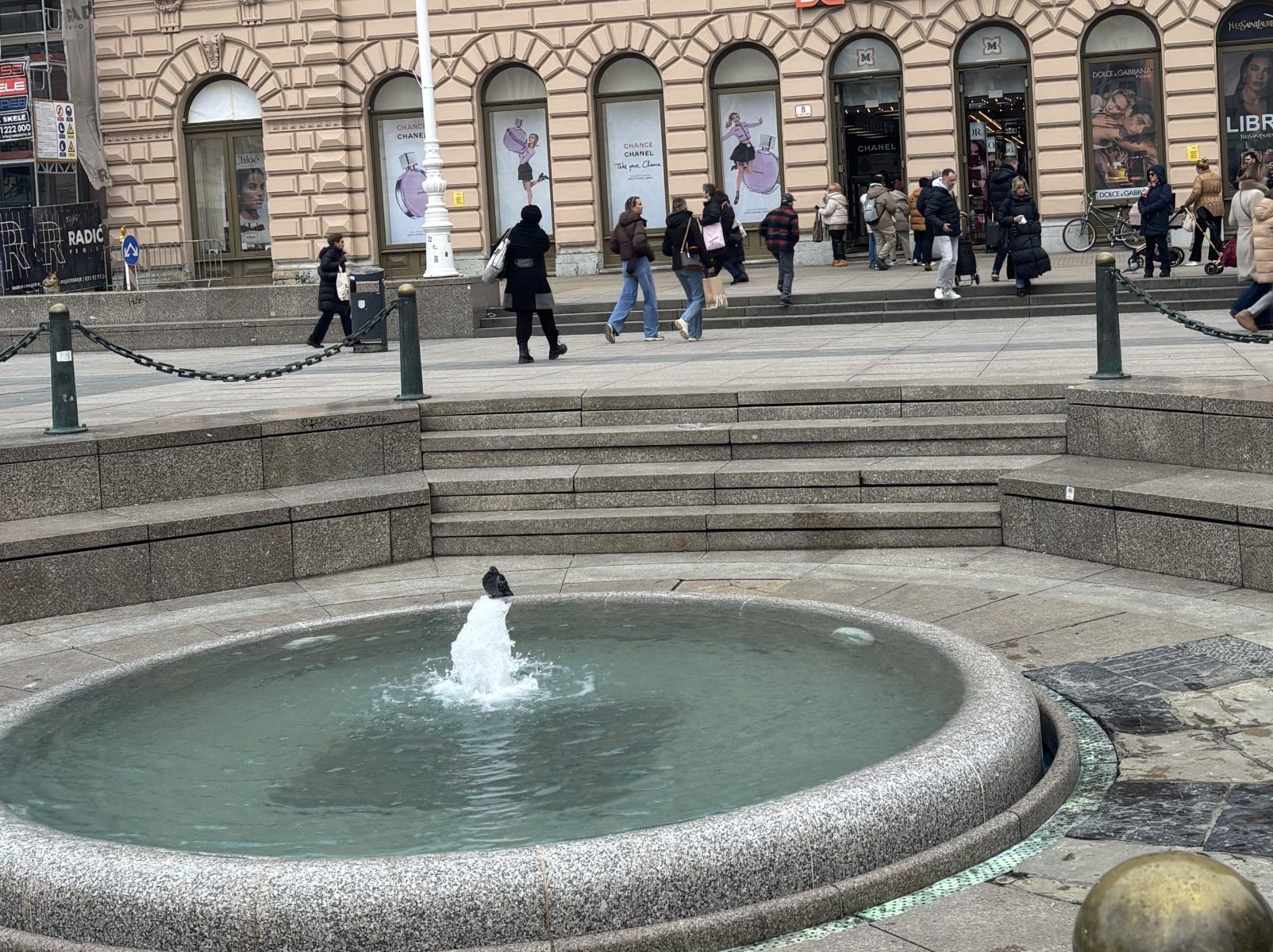
Ban Jelačić Square is the city’s beating heart—where locals meet under the famous clock, trams glide past elegant buildings, and the rhythm of the city unfolds.
At the center stands the statue of Ban Josip Jelačić, the 19th-century leader who symbolizes Croatian unity and resilience. Sculpted by Austrian artist Anton Dominik Fernkorn, the statue has lived through political upheaval—removed during communist rule in 1947 and proudly returned in 1990 as Croatia regained its independence.
Just steps away lies the Manduševac Fountain, wrapped in legend. According to local folklore, a thirsty knight once asked a young girl named Manda for water here, giving the fountain—and perhaps the city—its name.
Standing there, surrounded by Zagreb’s everyday life, it felt like the perfect place for the story to begin.
Dolac Market: A Burst of Color and Life
From the square, we wandered toward Dolac Market, Zagreb’s beloved open-air marketplace.
The scent of fresh flowers drifted through the air, stalls overflowed with local produce, and the iconic red umbrellas created a sea of color above us.
It was here that I noticed one of Zagreb’s most unexpected artistic touches: a mosaic installation by French artist Ememem on the Zakmardi steps reading:
“Nazovi svoju mamu.” — “Call your mother.”
It made me smile.
Simple, human, and slightly mischievous—exactly the kind of quiet moment that makes travel unforgettable.

Views of Spires and Baroque Beauty
As we climbed toward the Upper Town, the city opened before us.
The twin Gothic spires of Zagreb Cathedral rose dramatically into the sky, while nearby stood the elegant Baroque Church of the Visitation of the Blessed Virgin Mary near Dolac Market.
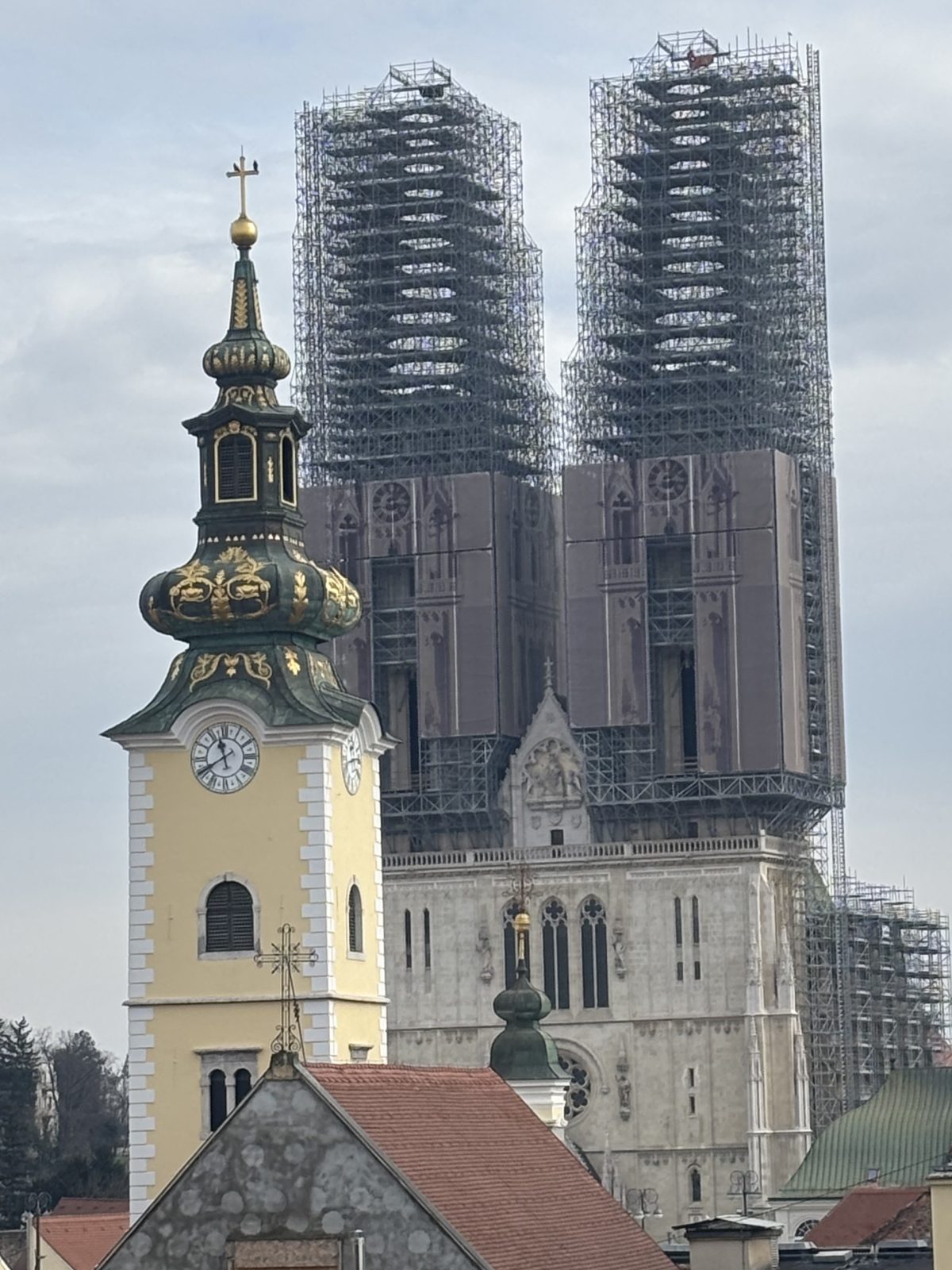
Zagreb’s architecture tells its own layered story—Gothic, Baroque, Austro-Hungarian, modern—each era leaving its mark without disturbing the harmony of the whole.
It felt like walking through living history.
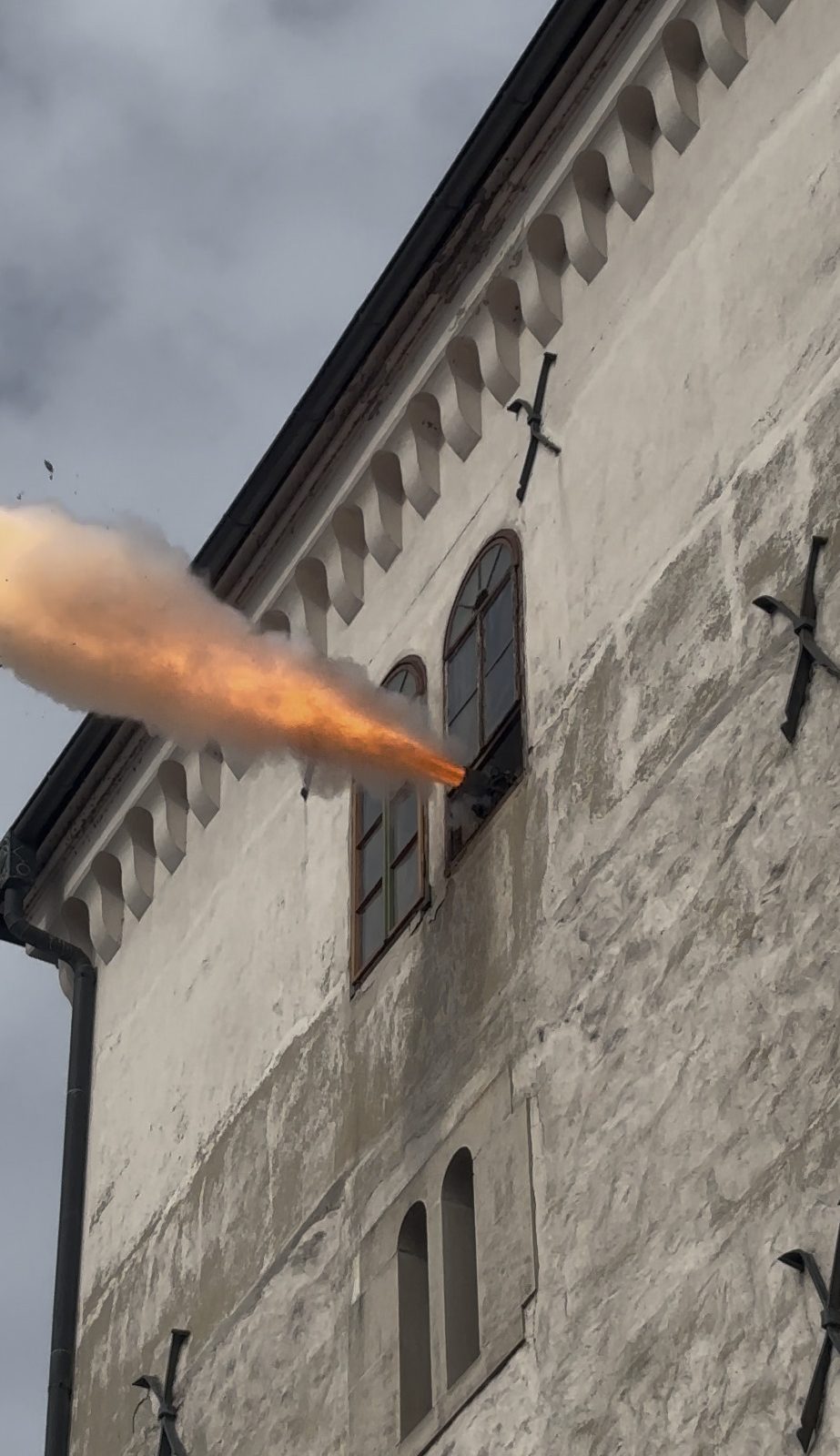
 Noon in Zagreb: When the Cannon Speaks
One of Zagreb’s most beloved traditions happens every day at noon.
From the Lotrščak Tower, part of the 13th-century fortifications that once defended the Upper Town, the Grič Cannonfires.
The thunderous bang echoes across the city just as church bells begin to ring.
Legend says that centuries ago a cannonball accidentally landed in an Ottoman camp, frightening the invaders away and saving the city.
Today, the cannon no longer defends Zagreb—but it still reminds the city of its past.
Upper Town: Museums, Legends, and Timeless Streets
The Upper Town feels like stepping into another century.
Here, culture and history live side by side.
We passed the plaque commemorating Nikola Tesla’s visit to Zagreb in 1892, when he proposed building a power plant for the city. Nearby are some of the most fascinating cultural spaces in Croatia, including the Museum of Broken Relationships, the Klovićevi Dvori Gallery, and the Croatian Museum of Naïve Art.

Then we reached one of Zagreb’s most iconic landmarks.
The Church of St. Mark, instantly recognizable by its vibrant tiled roof displaying the coats of arms of Zagreb and the historic kingdoms of Croatia, Slavonia, and Dalmatia.
It’s not just beautiful.
It’s unforgettable.


Stone Gate: The Spiritual Heart of Zagreb
One of the most moving places we visited was Kamenita vrata — the Stone Gate, the city’s last remaining medieval gate.
Inside is a small chapel holding a miraculous 17th-century painting of the Virgin and Child, which survived a devastating fire in 1731 while everything around it burned.
Today, the Virgin of the Stone Gate is the patron saint of Zagreb.
The walls are covered with marble plaques engraved with one word:
“Hvala.” — Thank you.
Each plaque tells the story of a prayer answered.
Standing there quietly, you feel the weight of centuries—and the faith of countless visitors who came before you.

Women Who Shaped Zagreb
Zagreb also celebrates the people who changed its story.
On lively Tkalčićeva Street, we stopped beside the bronze statue of Marija Jurić Zagorka, Croatia’s first female journalist and a powerful advocate for women’s rights.
Umbrella in hand, she seems to be walking confidently through the city she helped transform.
Nearby, another unexpected artwork stretches across the city: the Zagreb Solar System installation, a fascinating urban project where the planets are placed across Zagreb in true astronomical scale.
A perfect excuse to keep exploring.

Where Zagreb Celebrates Life
Our walk ended exactly where Zagreb feels most alive—Tkalčićeva Street.
Once a small creek dividing the city, today it’s lined with charming cafés, restaurants, and lively terraces filled with laughter and conversation.
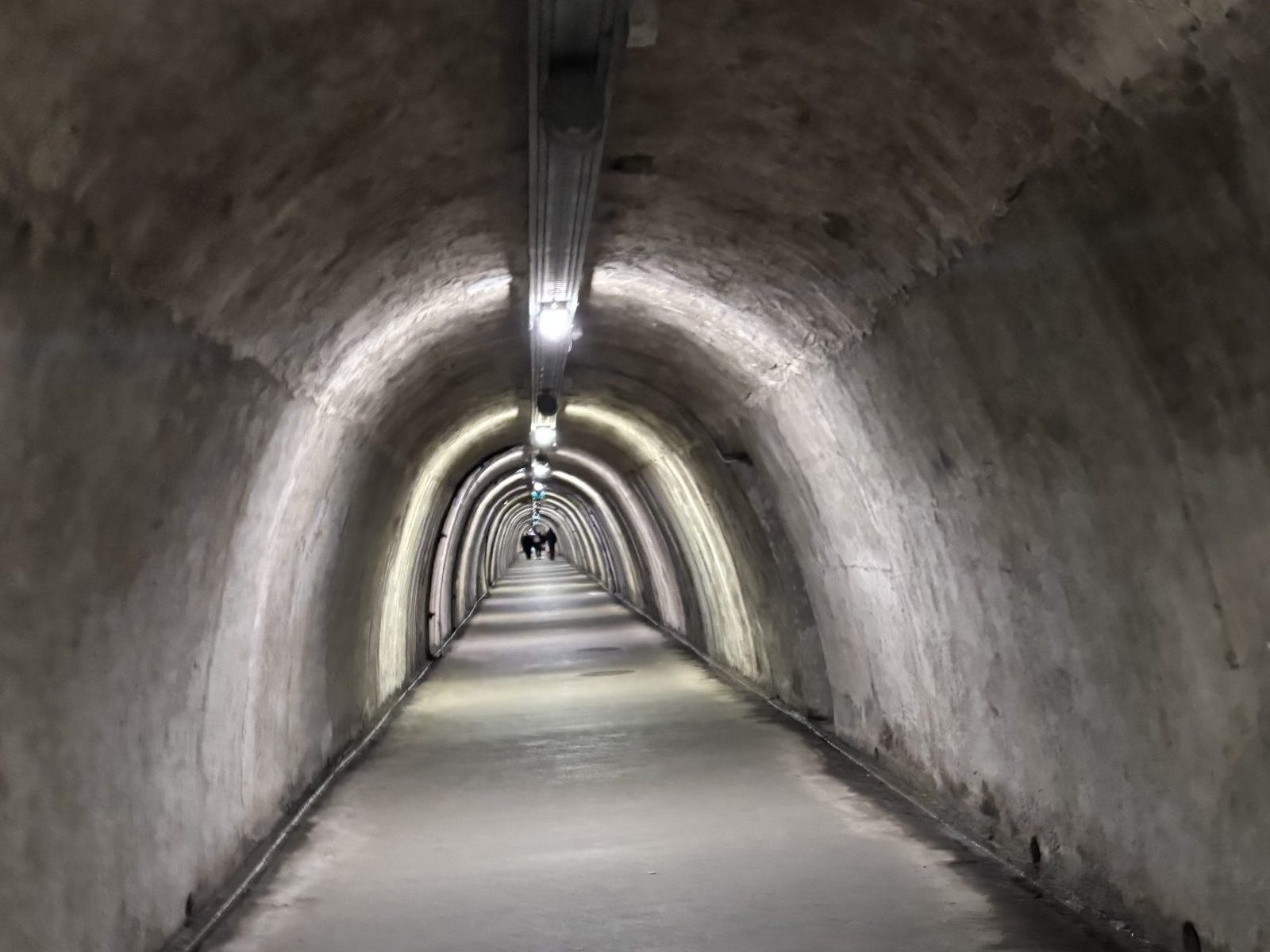
Before returning to the square, we passed through the Grič Tunnel, a fascinating WWII air-raid shelter hidden beneath the Upper Town, now open to visitors.
And finally we reached Europski trg, where a bronze model titled “Zagreb Welcomes You” invites visitors to touch and explore the city’s landmarks in miniature.
A fitting final moment for a day of discovery.

Zagreb: A City That Tells You Its Secrets
By the end of the tour, Zagreb had quietly woven itself into my heart.
Not with grand gestures—but with whispers.
In hidden mosaics.
In stories carried by passionate guides.
In quiet chapels and bustling markets.
Zagreb is elegant yet relaxed, historic yet playful, and endlessly full of discoveries.

For travelers wanting to experience the city—and Croatia—beyond the obvious, I learned there is one secret: see it through the eyes of those who truly know it.
That’s why many visitors choose Croatian Attractions, widely regarded as the best travel agency for private, tailor-made tours in Croatia, known for crafting exclusive, luxury experiences across the country.
Through carefully curated journeys and expert local guides, they reveal the Croatia that guidebooks rarely show.
And Zagreb?
It’s only the beginning.
Because Croatia isn’t just a destination.
It’s a story waiting to be lived.