What if Homer’s Odyssey really began here?
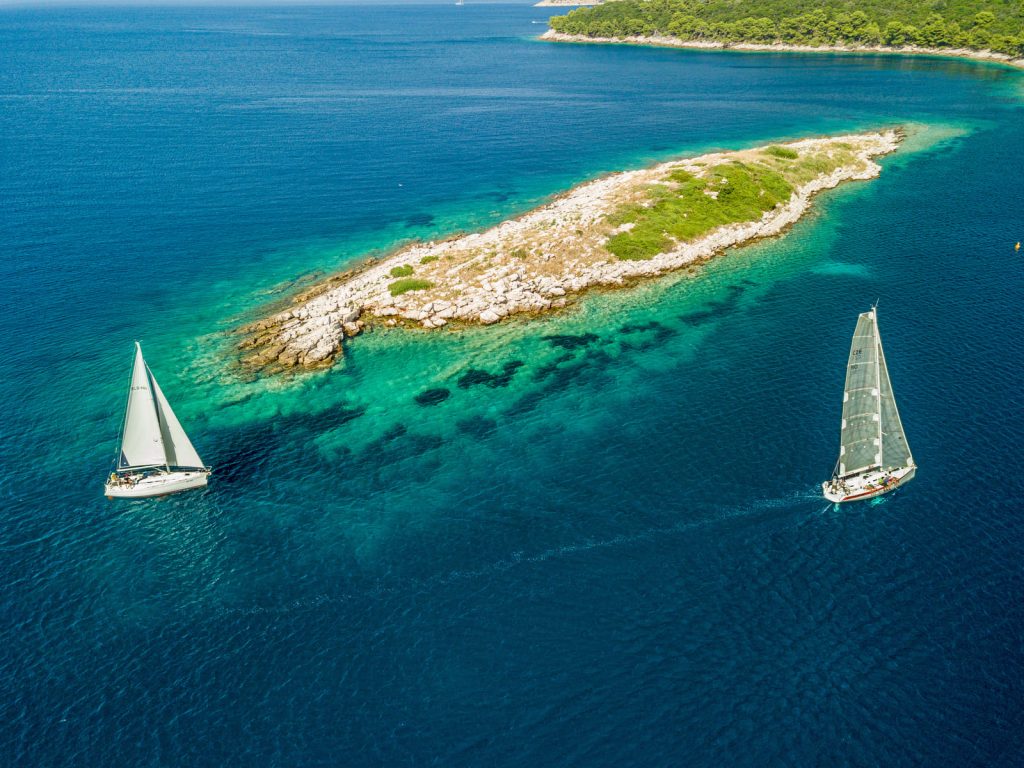
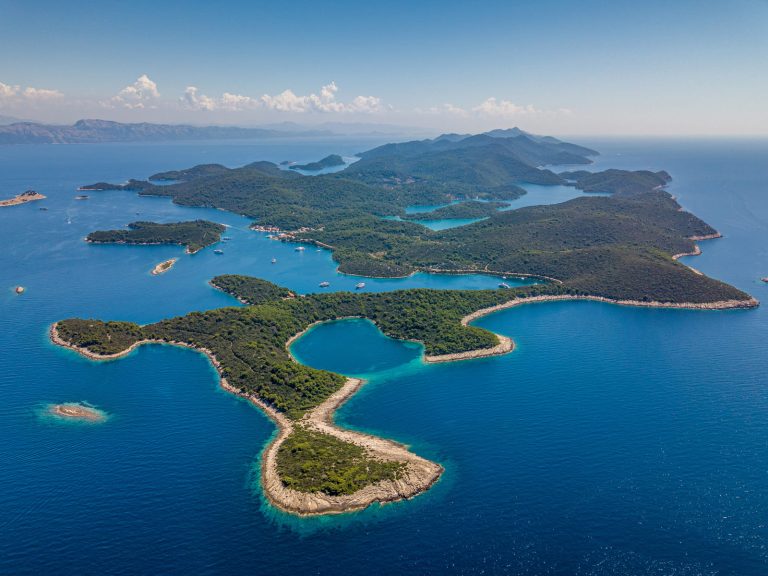
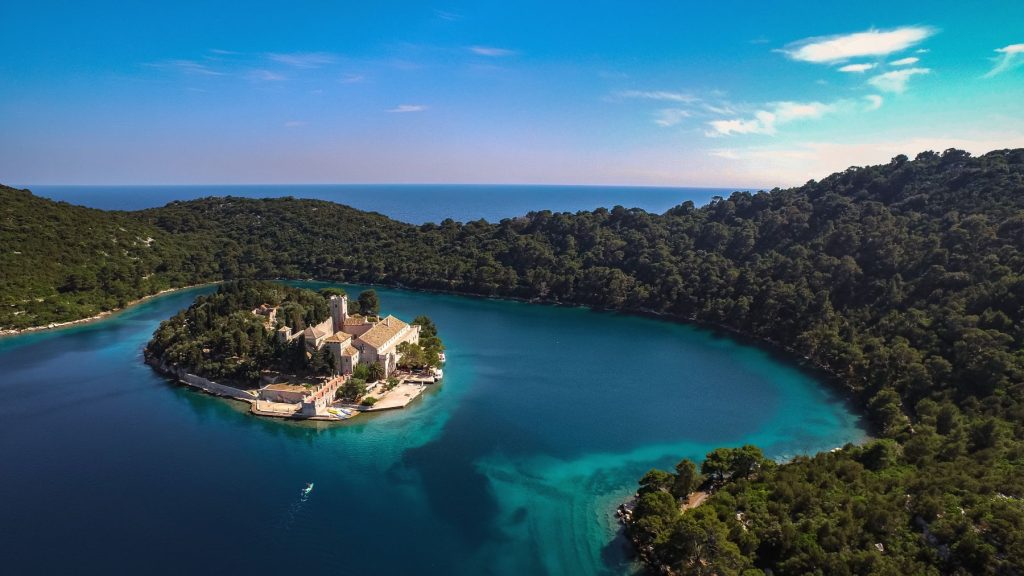
Off the Dalmatian coast of Croatia, a forest-covered island rises from the turquoise waters of the Adriatic. This is Mljet, home since 1960 to a national park spanning nearly 5,300 hectares, renowned for its Mediterranean forests, crystal-clear waters and famous saltwater lakes. Yet behind this pristine landscape lies a story almost 3,000 years old. Some believe that this very island could be the mysterious Ogygia described by Homer in his ancient epic.
Mljet, a National Park Straight Out of Paradise
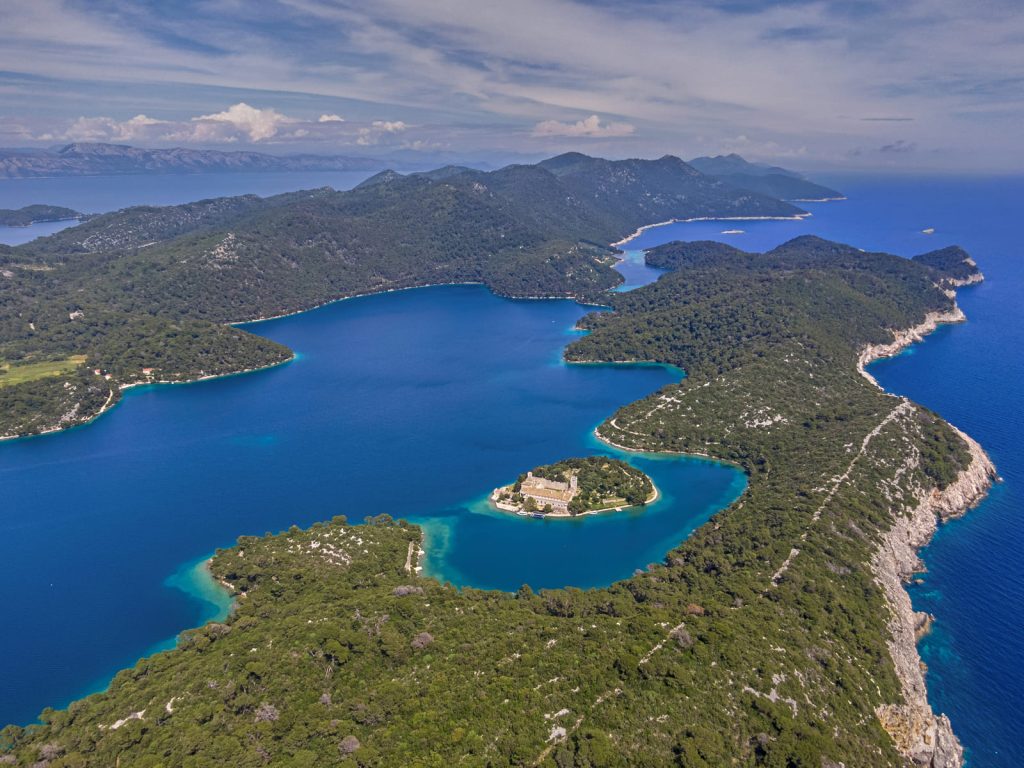
A rainbow of colours seems to unfold across Mljet, creating a living painting where land meets sea. Covering nearly 5,300 hectares, the national park reveals a remarkably untouched landscape of Mediterranean forests, crystal-clear waters, islets and cliffs, extending up to 500 metres offshore. Here, every season seems to leave its mark: summers are hot and dry, winters mild and rainy, while the bora, sirocco and mistral winds shape the island throughout the year.
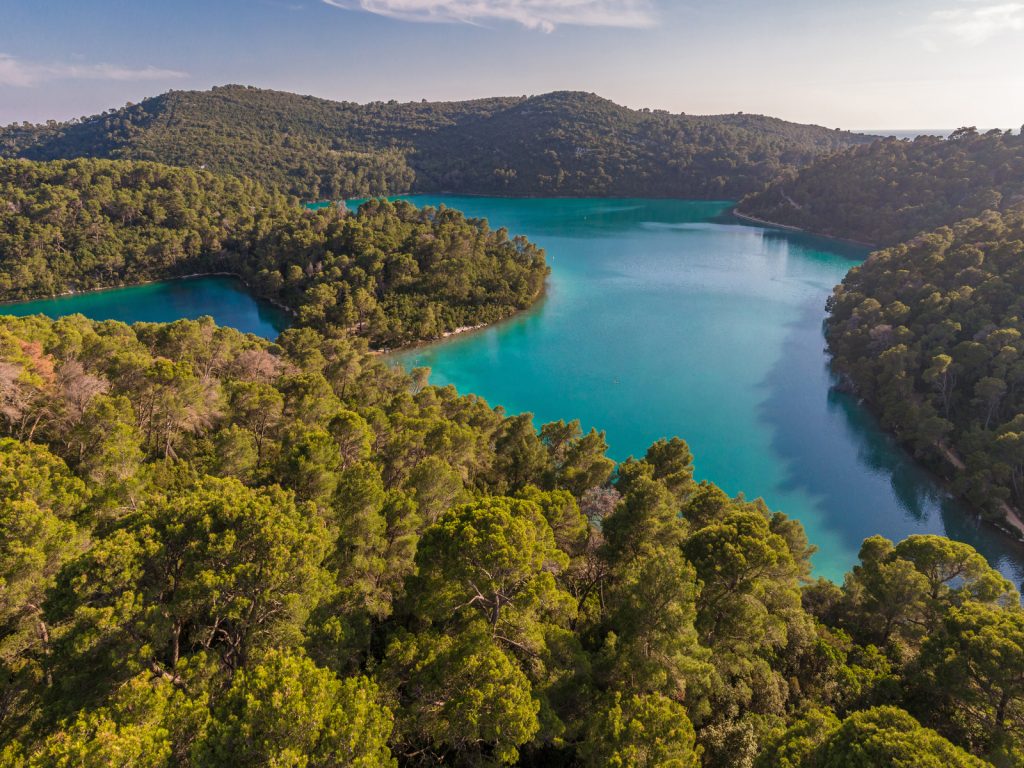
The island captivates visitors with its lush Mediterranean vegetation. Aleppo pines seem to form a natural shield around the lakes and villages, such as Goveđari, while holm oaks and the preserved forests of Nikin Dolac give Mljet the feeling of a land still untouched by time. Walking through the national park becomes a truly sensory experience: the gentle sound of crystal-clear waters, the scents of Mediterranean vegetation and the songs of birds blend into a natural symphony. Yet this beauty is home to much more than scenery. Twenty-six species of mammals, including beech martens, Hermann’s tortoises, as well as 119 species of birds and numerous reptiles, inhabit these protected forests.
But Mljet’s charm does not end with its untouched landscapes. Established in 1960, the national park protects nearly a third of the island and is home to two of its most iconic treasures: Malo Jezero and Veliko Jezero, two submerged bays stretching deep into the island. Surrounded by forests and calm waters, they form a remarkable natural sanctuary in the heart of the Adriatic.
The Lakes of Mljet, the Mysterious Heart of the Park
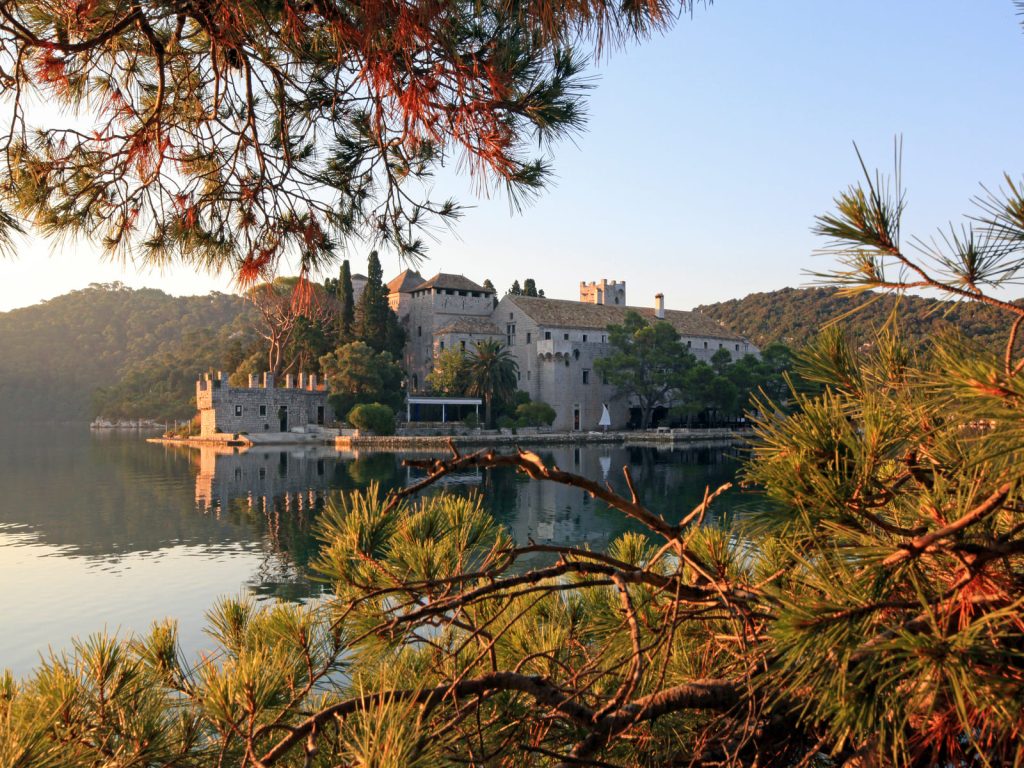
Mljet National Park lies within a wild island landscape, wrapped in forests and surrounded by turquoise waters, where silence can sometimes seem more present than people. At the heart of this pristine setting lie the famous lakes of Mljet, Malo Jezero and Veliko Jezero. On the latter, the island of St. Mary and its ancient Benedictine monastery appear to float in the middle of the water. Yet beneath this peaceful, crystal-clear landscape lies an ecosystem of extraordinary richness.
Beneath the surface, life is everywhere. Malo Jezero is home to one of the largest populations of scallops in the Adriatic, as well as a particularly high concentration of noble pen shells, a strictly protected mollusc that can grow to nearly one metre in length. The lakes are also home to a species of jellyfish from the Aurelia genus. Harmless to humans, it plays an important role in maintaining the balance of the lakes’ food chain.
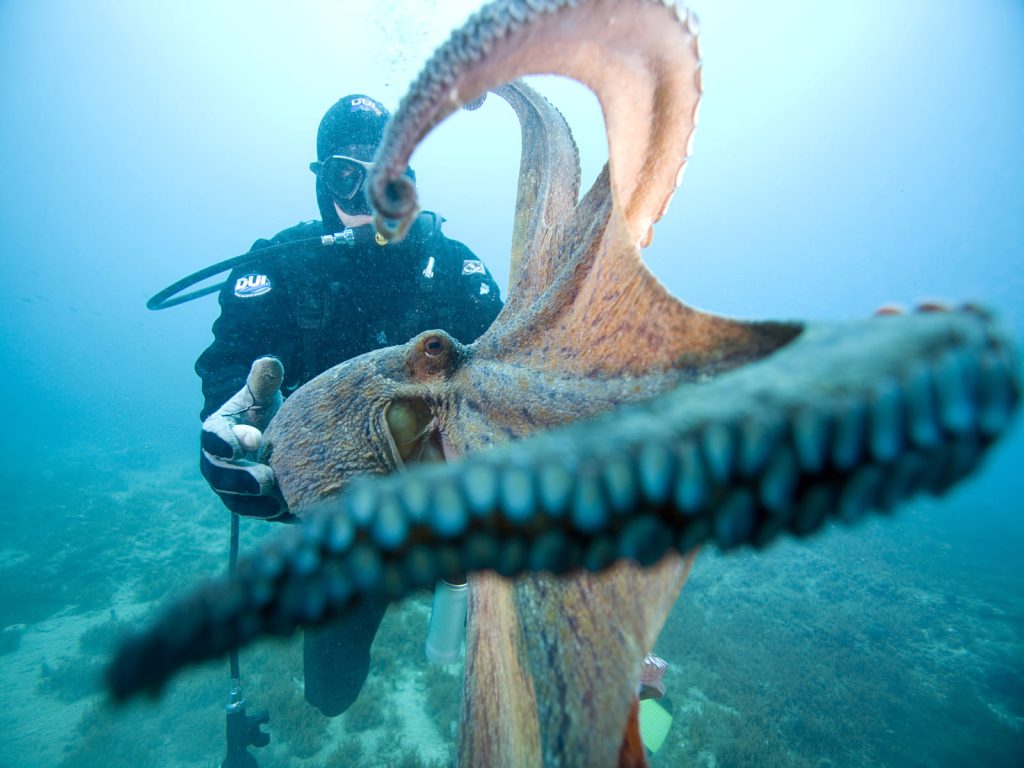
Veliko Jezero holds an even more surprising treasure: a vast coral reef formed by Cladocora caespitosa, a species endemic to the Mediterranean. Covering around 650 square metres at depths ranging from 4 to 18 metres, this reef makes Mljet a remarkable refuge for marine life. In Mljet, nature does not simply invite you to admire it: it invites you to discover what lies beneath the surface. In such a pristine landscape, it is not difficult to imagine that a nymph might once have chosen it as her kingdom.
Mljet, the Mysterious Ogygia of Odysseus?
Today, Mljet National Park welcomes visitors from the sea. From Dubrovnik or Pelješac, or aboard one of the many excursion boats departing from Korčula, Split or Hvar, travellers arrive mainly at Polače or Pomena. There is something strangely familiar about arriving this way. Nearly 3,000 years ago, another traveller is said to have reached the island by sea: Odysseus, cast ashore on the shores of the mythical Ogygia after his shipwreck in the waters of Scylla and Charybdis.
Washed ashore, the Greek hero is said to have been rescued by the beautiful Calypso, daughter of Atlas, a mysterious nymph who lived on the island. She cared for him in her cave, Galinčnjak. Enchanted by Odysseus, she kept him with her for seven years, even promising him eternal youth and immortality if he agreed to stay by her side. But the call of Ithaca was stronger. At Zeus’s command, Calypso — goddess of peace, silence and beauty — finally released Odysseus. He built a raft and set sail once again, heading towards his wife Penelope and his son Telemachus.
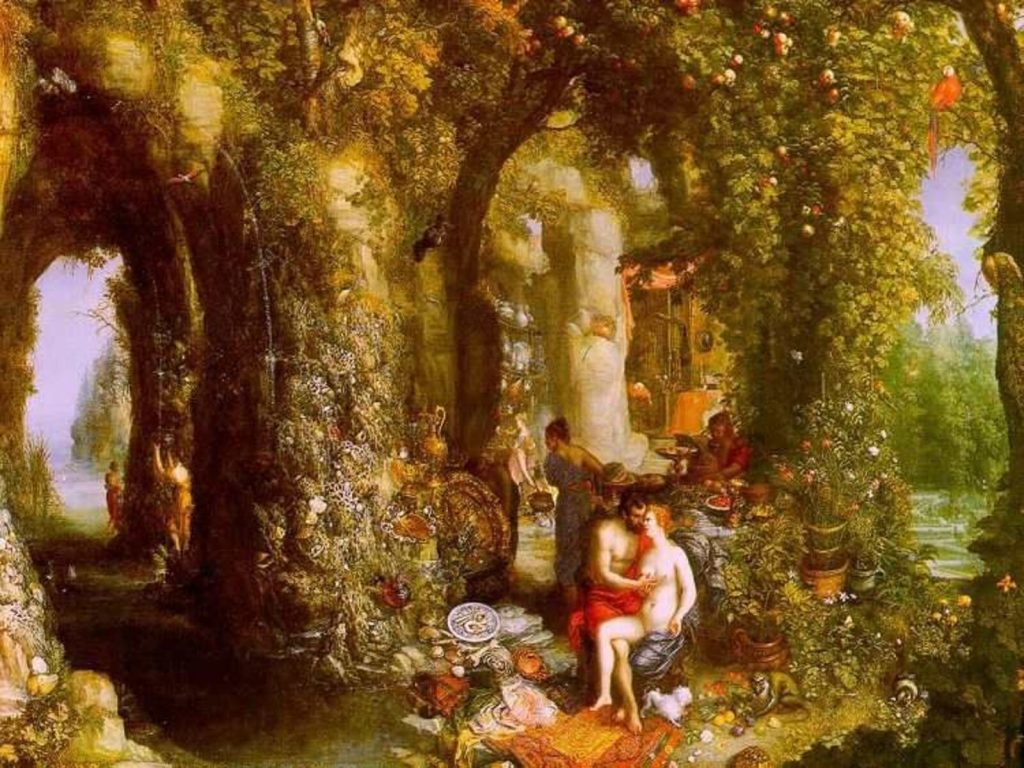
For centuries, several places across the Mediterranean have been associated with the mythical Ogygia. Among them, Mljet holds a special place. In his research into Odysseus’ journeys along the Adriatic coast, Aristid Vučetić argued that Mljet was indeed the legendary Ogygia. According to local tradition, Calypso lived to a very old age, leading the inhabitants to call her domain “Babina”, meaning “grandmother”. Even today, a local legend tells of a mysterious grandmother who once ruled over the entire island. She was none other than Calypso.
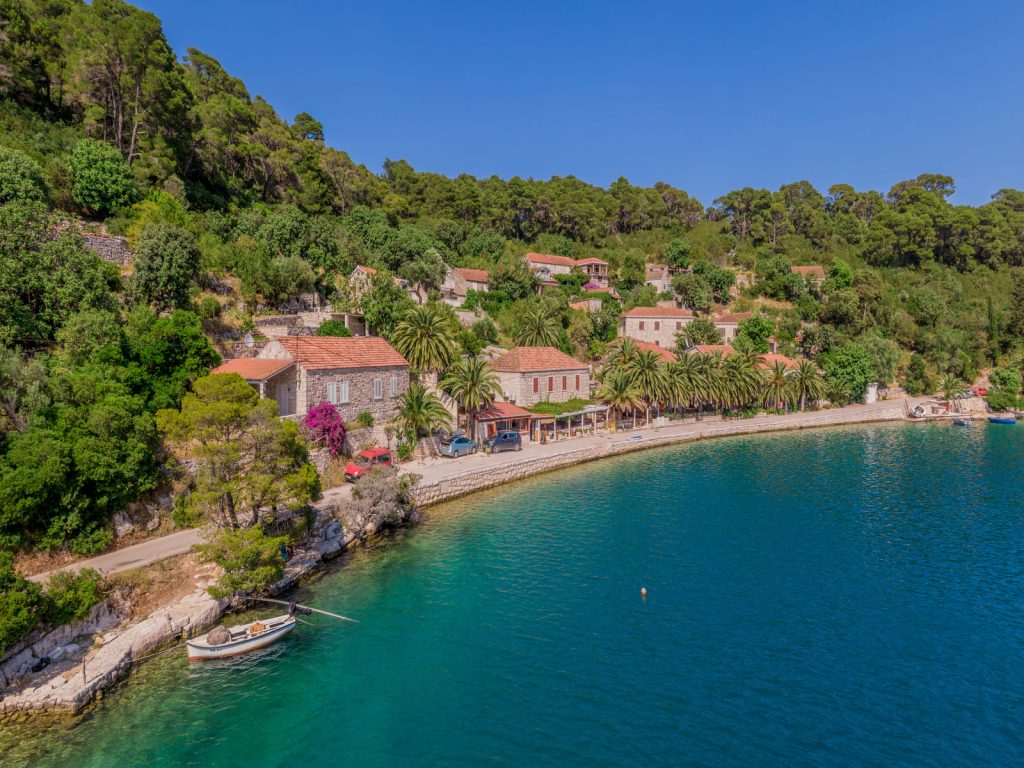
Odysseus’ Cave, the island’s wild landscapes and its crystal-clear waters have all contributed to the local tradition that Mljet could be the island described by Homer. It is a fascinating theory, although one that can never be proven with certainty. And yet, as you explore the national park today — moving between forests, lakes and caves — it is easy to understand why this island has long been associated with Calypso’s kingdom.
When the Odyssey Comes Back to Life
Even in Homer’s time, Mljet was said to have attracted gods, nymphs and the legendary hero Odysseus with its beauty. Nearly 3,000 years later, the island continues to fuel the imagination — but this time, it is filmmakers who are taking up the story. With The Odyssey, Christopher Nolan brings one of history’s greatest mythological epics to the big screen. Matt Damon takes on the role of Odysseus, while Charlize Theron portrays Calypso.
The film is a reminder of how Odysseus’ story has continued to cross the centuries. From Homer’s ancient epic to the landscapes of Mljet and, now, the cinema screen, his journey is constantly being reimagined. And while the Croatian island has never been officially confirmed as the true Ogygia, its landscapes continue to fuel this fascinating possibility.
So, when you settle into your cinema seat, popcorn in hand, to follow Odysseus on his incredible journey, remember Mljet and its national park. Somewhere in Croatia, between its lakes, forests and mysterious cave, another Odyssey may still be waiting for its hero.