The Dalmatian City That Waits to Be Discovered

Some cities impress you immediately. Šibenik is different. It does not reveal everything at first glance, and perhaps that is exactly what makes it so memorable.
At first, you notice the sea, the stone façades, the quiet rhythm of the waterfront. Then, slowly, the city begins to open itself. A narrow staircase leads to a small square. A shaded alley suddenly frames a glimpse of blue. A simple stone wall carries centuries of history without trying to explain itself.
Šibenik is not as loud as some other Dalmatian cities. It does not need to be. Its beauty feels more discreet, more intimate, and more human. It is a city made for walking slowly, for looking up, for following streets without always knowing where they will lead.
This is the charm of Šibenik. It is not only a destination to see. It is a city to feel, to wander through, and to let unfold at its own pace.
Where the Old Town Teaches You to Slow Down
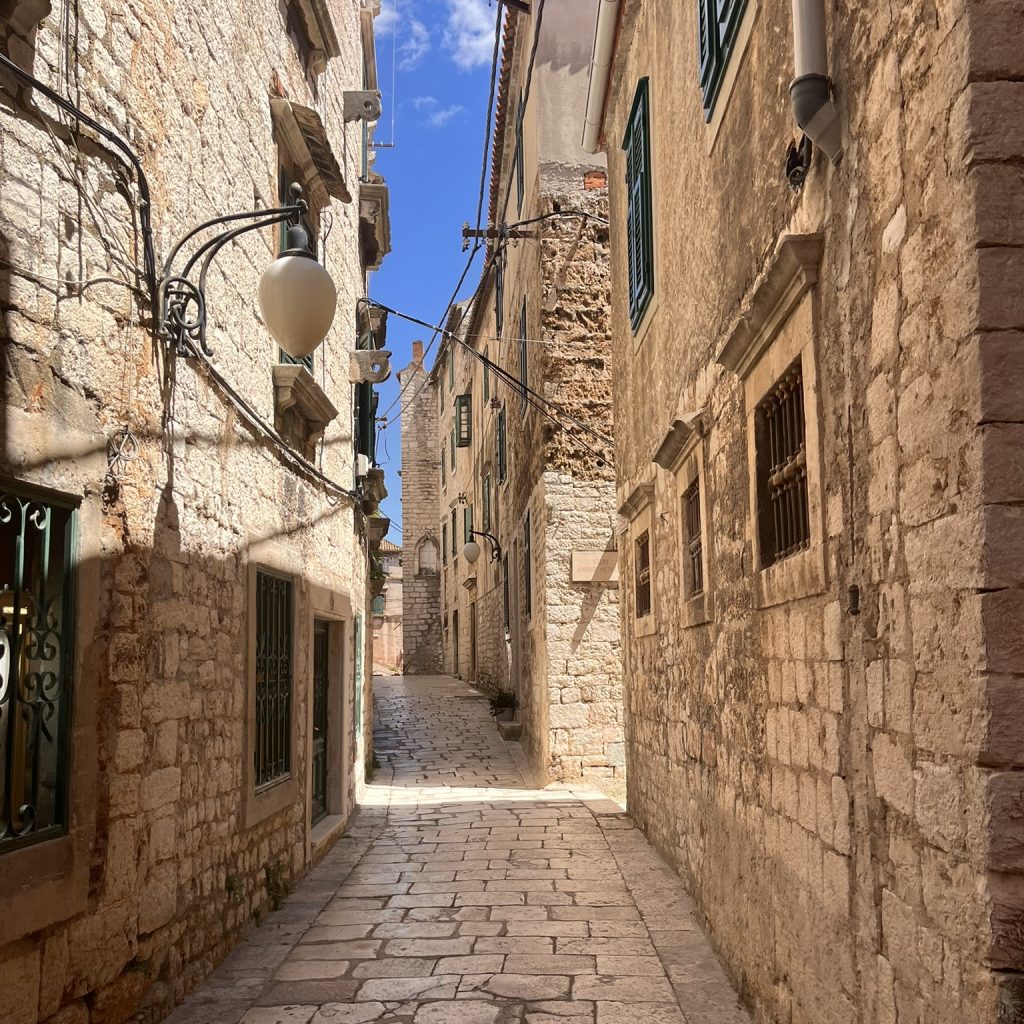
To understand Šibenik, you have to leave the waterfront and step into the old town. This is where the city begins to change rhythm.
There is something almost natural about getting lost here. Stairways climb between old houses, small passages open onto quiet corners, and suddenly, a square appears where you did not expect one. Nothing feels perfectly planned, and that is part of the charm. Šibenik invites you to follow your curiosity rather than a strict itinerary.
Walking through the old town, the details matter. The texture of the stone walls, the green shutters, the small balconies, the sound of voices coming from cafés hidden in the shade. It feels lived-in, not staged. Even with its history and monuments, Šibenik remains a real city, with daily life moving quietly around its visitors.
This is what makes the old town so special. It is not only beautiful because of what you see, but because of how it makes you move: slowly, attentively, and with the feeling that every street has something more to reveal.
The Cathedral of St. James: Šibenik’s Stone Masterpiece
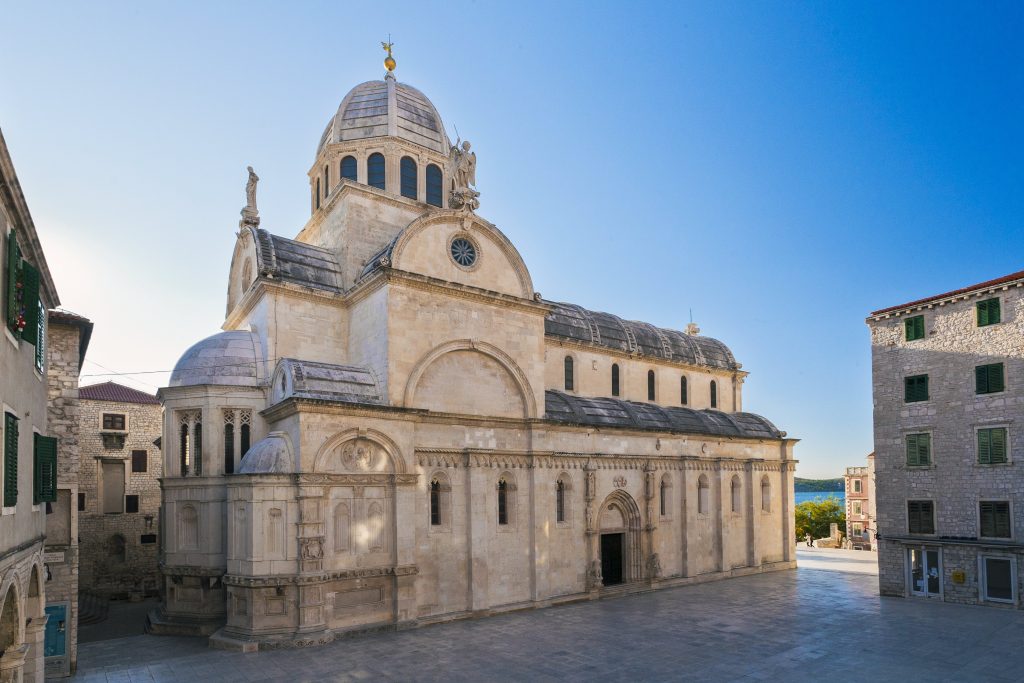
At the heart of Šibenik stands the Cathedral of St. James, one of those monuments that seems to gather the whole city around it. After walking through the narrow streets of the old town, arriving in front of the cathedral feels almost theatrical. The space opens, the stone becomes brighter, and suddenly Šibenik’s history stands before you in one powerful image.
Built between the 15th and 16th centuries, the cathedral is not only the city’s most famous landmark, but also one of the great architectural treasures of the Dalmatian coast. Its UNESCO status reflects its exceptional value, especially as a meeting point between Gothic and Renaissance influences, and between artistic traditions from Dalmatia, Northern Italy, and Tuscany.
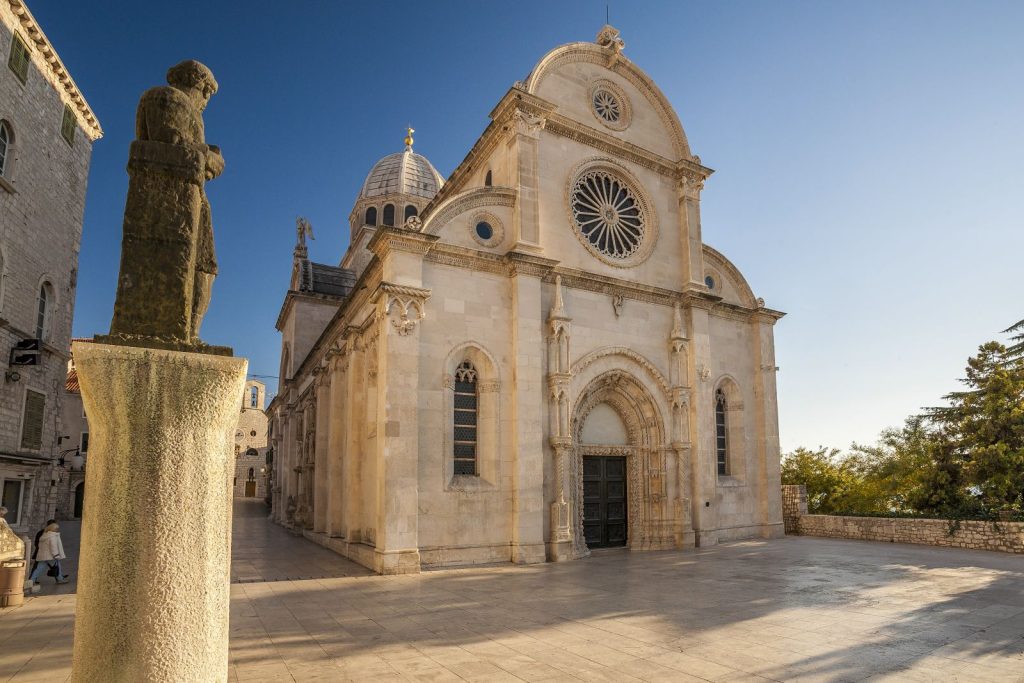
What makes the Cathedral of St. James so striking is not only its size, but its precision. It feels carved more than constructed, as if the entire building had emerged from stone with patience and confidence. Its façades, sculpted details, and harmonious forms give the impression of a monument designed to last beyond time.
One of its most fascinating features is the row of sculpted human heads around the exterior. They are expressive, varied, and strangely alive. Some seem serious, others curious, almost familiar. Standing in front of them, you feel that the cathedral is not only a religious monument, but also a human one. It carries faces, gestures, and traces of the people who shaped the city.
Fortresses Above the City, Guardians of the Sea
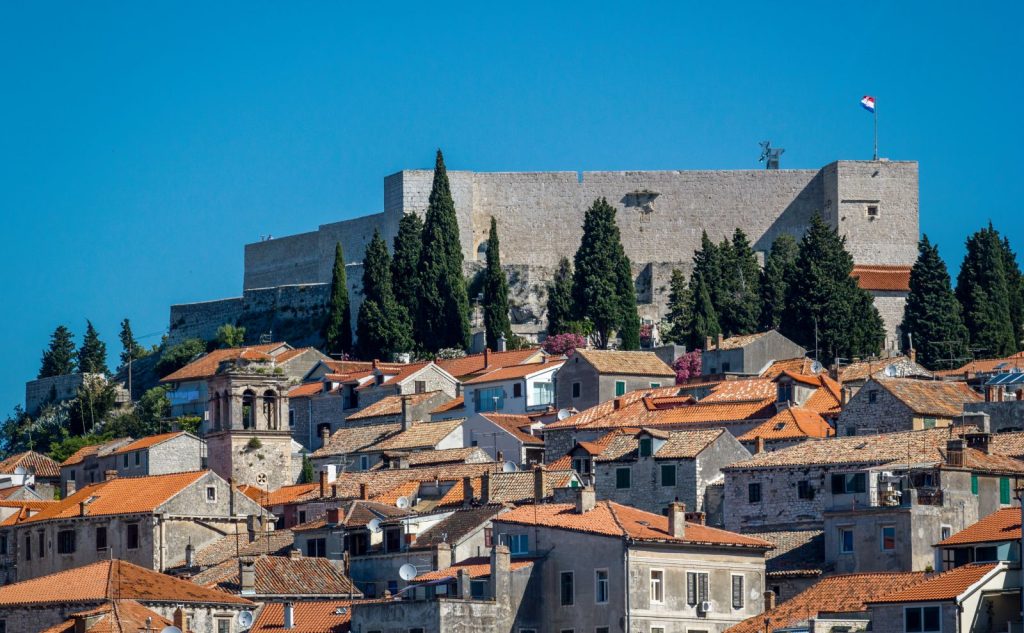
St. Michael’s Fortress is one of the most symbolic viewpoints of the city. Standing above the old town, it offers a powerful look over Šibenik’s stone roofs, the cathedral, the harbour, and the islands beyond. From there, the city seems to gather itself between the hill and the sea, revealing its shape in a way that is difficult to understand from the streets alone.
Barone Fortress and St. John’s Fortress add another layer to this defensive landscape. They tell the story of a city that had to watch the horizon, protect its people, and adapt to the challenges of its time. Today, these places are not only historical sites, but also spaces where visitors can pause, look around, and feel the connection between Šibenik’s past and its present.

Further away, at the entrance to the channel, St. Nicholas Fortress stands as a guardian of the sea. Its position gives it a different character from the fortresses above the city. It belongs to the maritime side of Šibenik, where stone, water, and defence meet in one striking image.
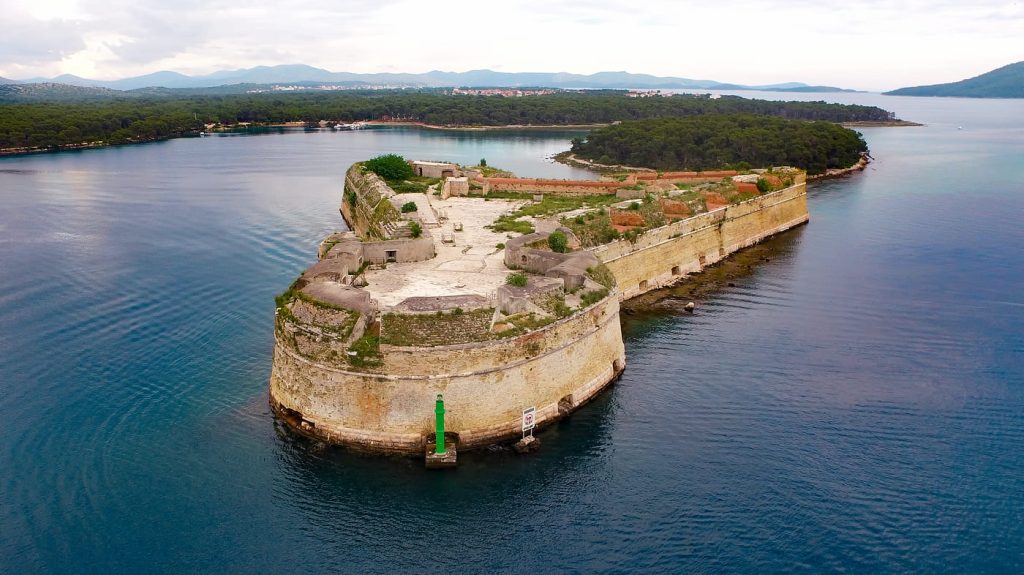
Together, these fortresses make Šibenik feel complete. They are not just monuments placed around the city. They are part of its identity. They frame the old town, open the view toward the Adriatic, and remind you that Šibenik has always lived between beauty and protection.
Why Šibenik Stays With You
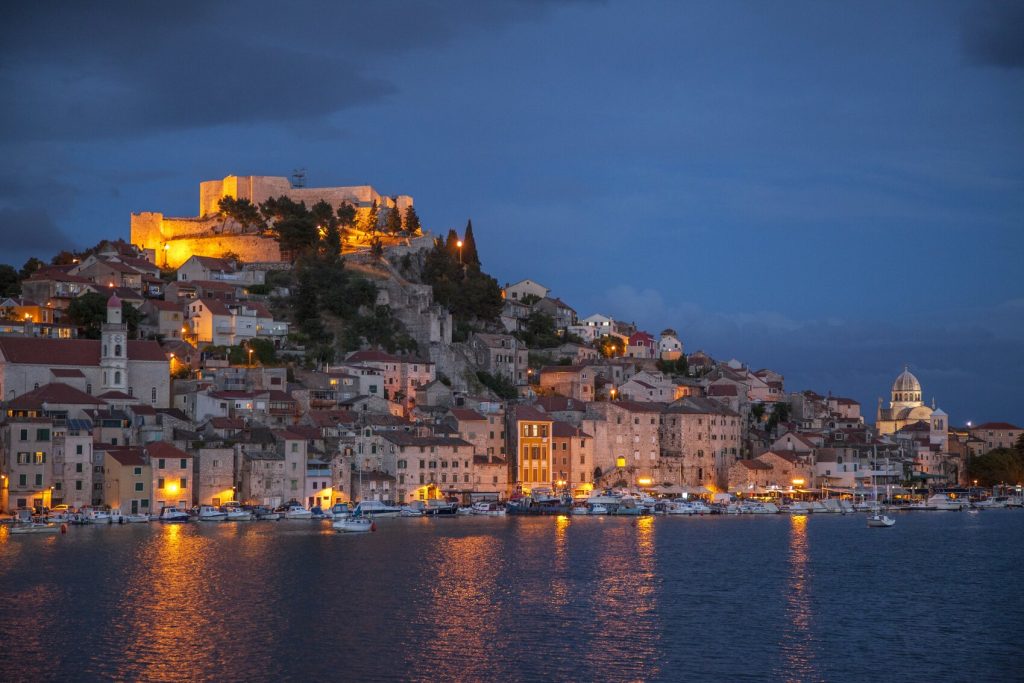
Šibenik leaves a different kind of impression. Not because it tries to be spectacular, but because it feels sincere.
After a day spent walking through its old town, standing before its cathedral, and looking over the city from its fortresses, you understand that its beauty is not only in its monuments. It is in the rhythm of the streets, the calm of the stone, and the way the sea always seems close without taking over.
Šibenik is a city that rewards attention. The more slowly you explore it, the more it gives back.