A Slow Journey Through Cascades, Islands and Living Stone
Some places impress you with silence. Others with scale. Krka National Park does something more graceful: it speaks through water.
Here, the river is never still. It falls, widens, disappears behind reeds, returns beneath wooden paths, and gathers again in pools of green and silver. The landscape feels alive, not because it overwhelms, but because everything moves with its own quiet rhythm.
Located in Šibenik-Knin County, Krka National Park is one of Croatia’s most memorable natural treasures. Many visitors arrive for the waterfalls, and they are right to do so. But Krka is far more than a postcard view. It is a river landscape shaped by water, stone, vegetation, history, and centuries of life along its banks.
This is a place to walk through slowly, not because there is little to see, but because every detail asks for attention.
Not Just a Waterfall, But a Landscape in Motion
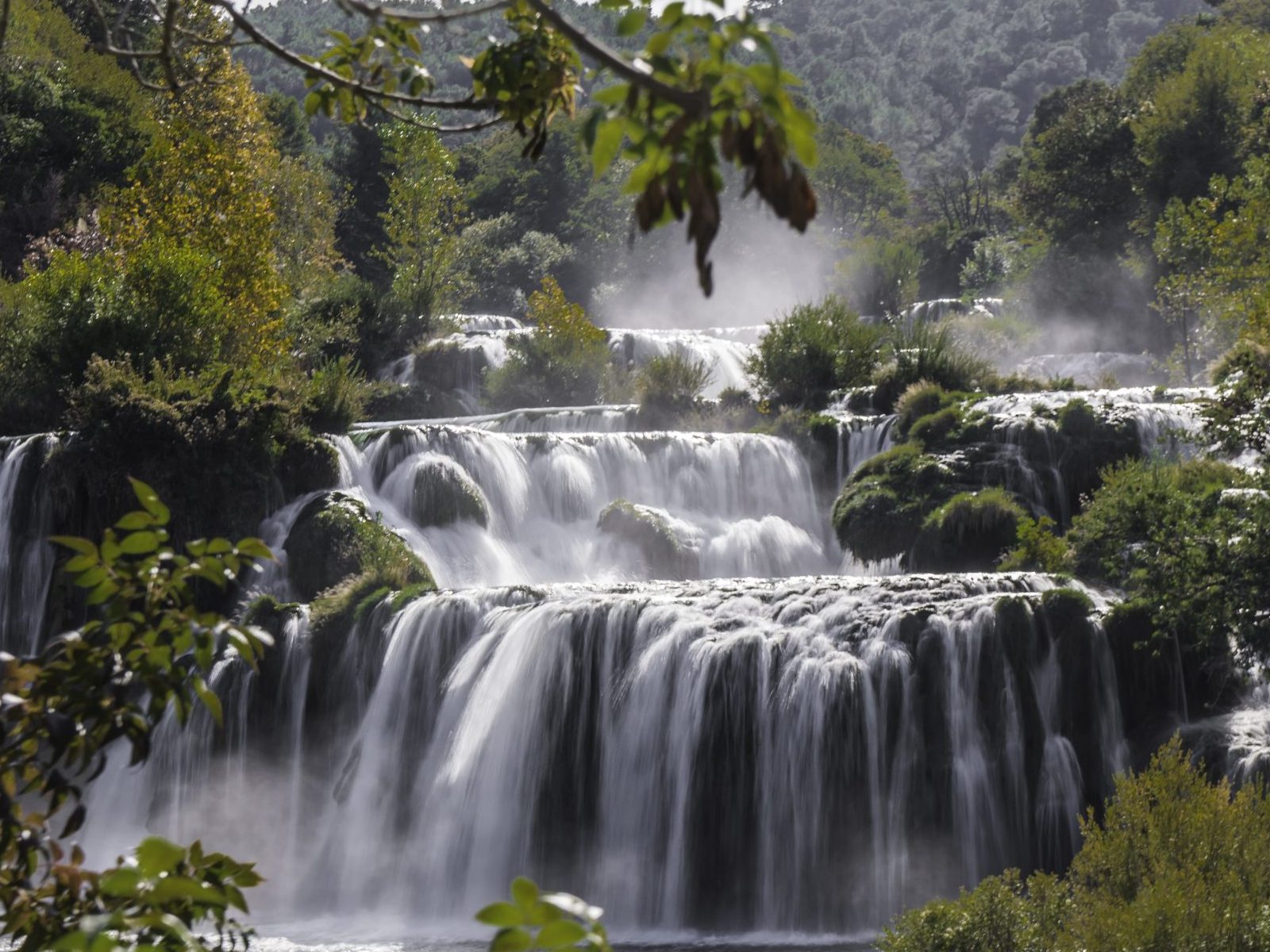
Krka National Park follows the course of the Krka River, a river that has carved its way through karst terrain and created one of Dalmatia’s most distinctive natural landscapes.
The park is famous for its waterfalls, yet their beauty comes from something deeper than the final view. Over time, the river has formed tufa barriers — natural limestone formations created by water, minerals, mosses, and living organisms. These barriers are fragile and constantly changing, giving Krka its particular character.
This is why the park does not feel like a fixed landscape. It is still being shaped. The water continues to build, soften, divide, and connect the scenery around it.
In spring, Krka is fresh and green, with plants growing close to the walkways and the sound of the river present at every turn. In summer, the water catches the Dalmatian light and transforms the park into a bright, moving landscape. Krka changes with the seasons, but the presence of the river remains constant.
Skradinski Buk: The Beating Heart of Krka
For many visitors, Skradinski buk is the first encounter with Krka National Park. It is also the most famous part of the park, and for good reason.
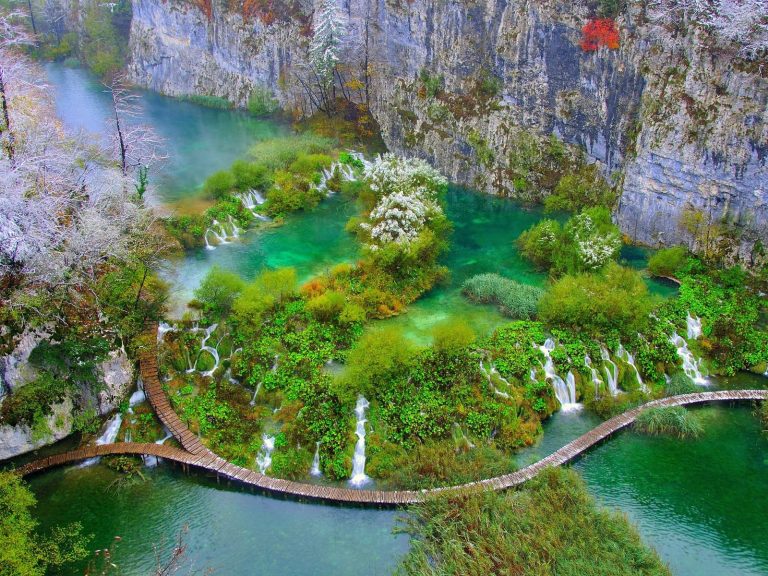
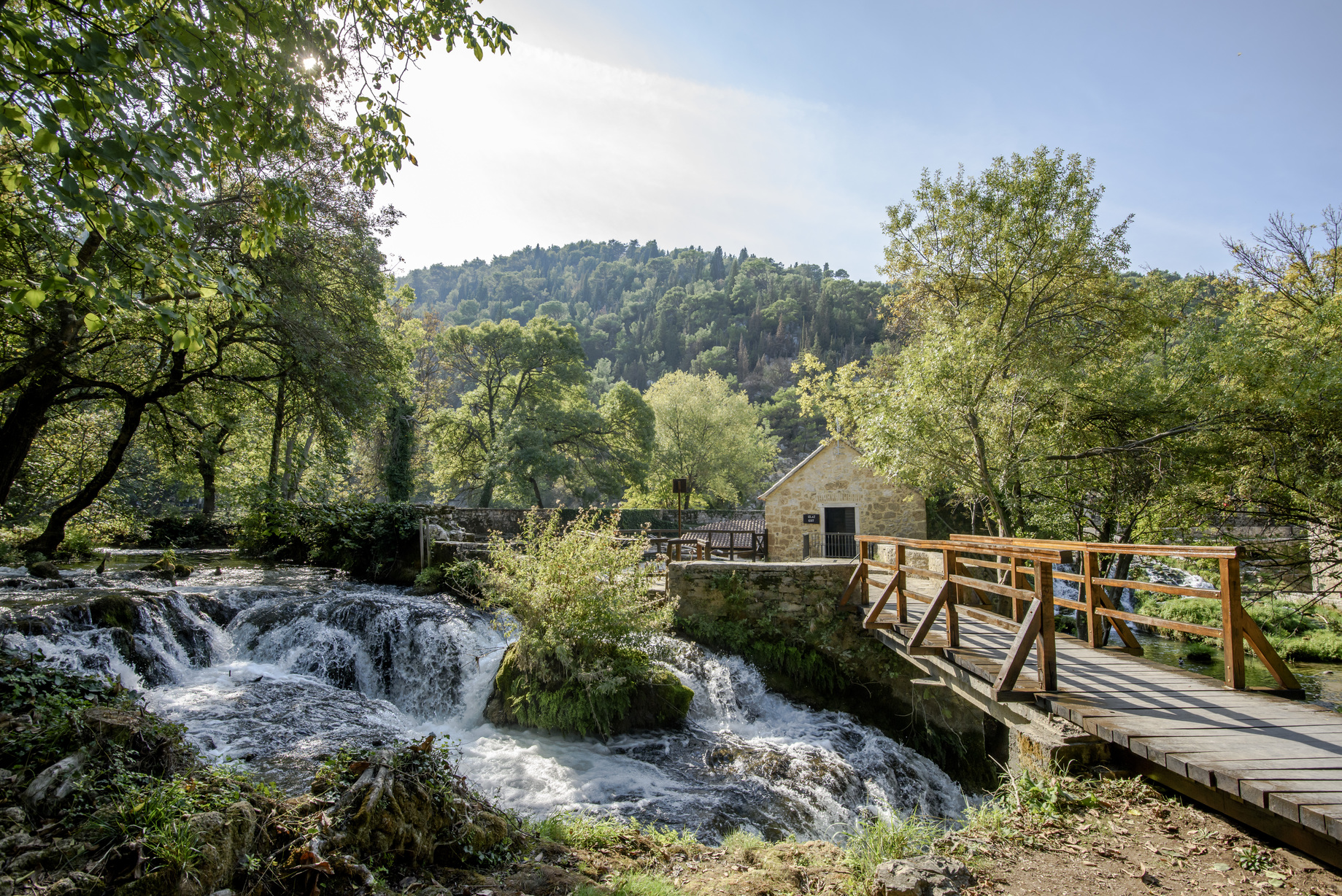
Here, the river spreads into a wide series of cascades, streams, pools, and viewpoints. The water does not fall in one simple line. It moves in layers, creating a landscape that feels both powerful and delicate.
The wooden trail around Skradinski buk allows visitors to enter this world without disturbing it. One moment, you are walking beneath trees. The next, the water opens in front of you. Small bridges cross clear streams. Reflections appear between branches. The sound of the falls grows louder, then softer again.
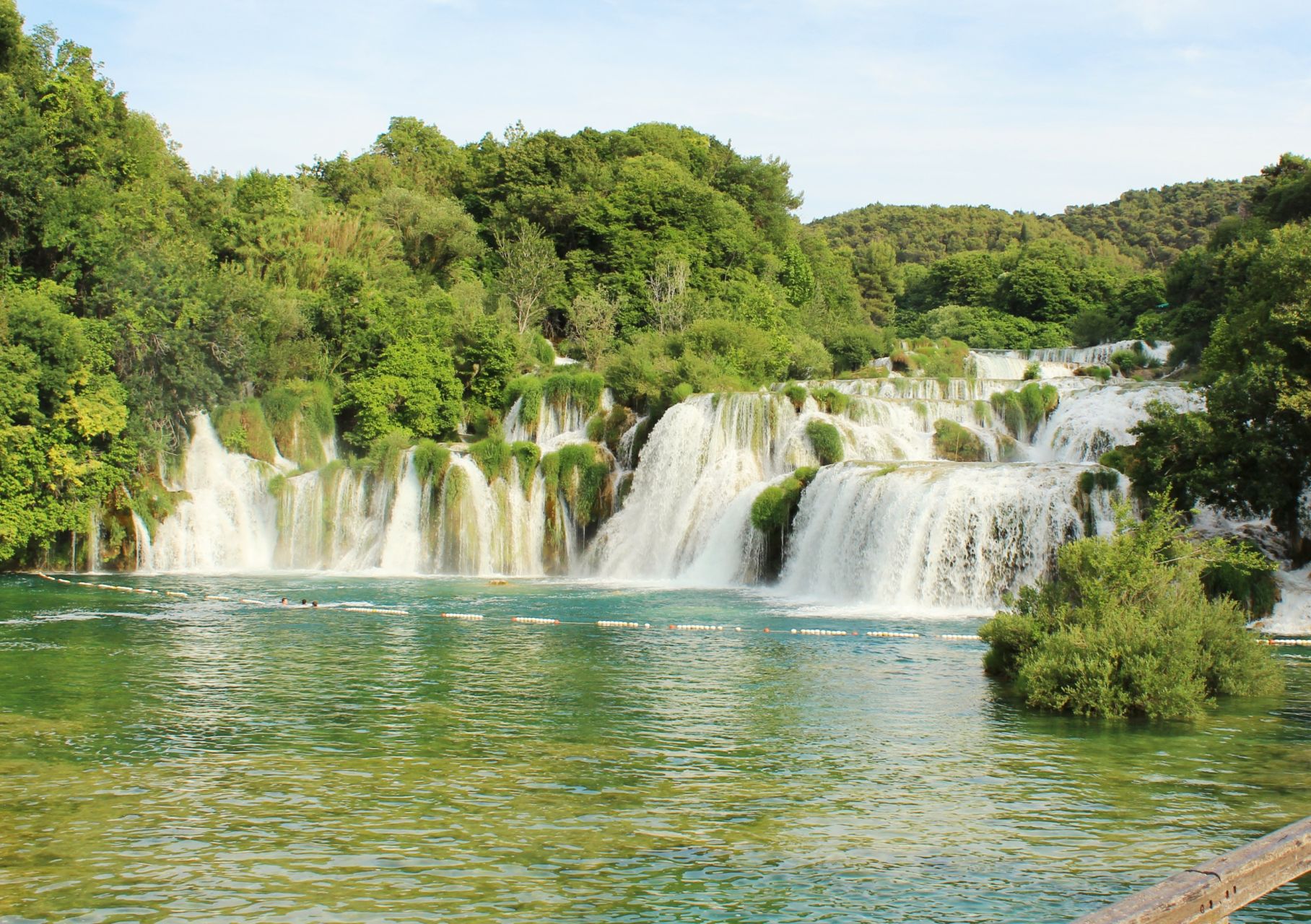
This part of Krka is especially memorable because it surrounds you. You do not only look at the waterfall from a distance. You move around it, beside it and above it.
Skradinski buk also carries traces of human life. The restored watermills remind visitors that the river was once part of local work and daily routines. Nearby, the remains of the old hydroelectric plant tell another story — one of innovation and the early use of water power in this region.

Visovac: The Island That Teaches Stillness
Beyond the movement of the waterfalls, Krka also offers places of remarkable stillness.
Visovac Island is one of them. Resting in the middle of Visovac Lake, it feels almost suspended between water and sky. The island is home to a Franciscan monastery and church, giving the landscape a peaceful, almost spiritual atmosphere.
The beauty of Visovac comes from balance. The lake is calm, the island is small, and the surrounding nature creates a sense of distance from the outside world. It is not a place that needs to impress loudly. Its charm is quieter, shaped by reflection, faith, and time.
Roški Slap: Krka’s Softer, More Intimate Side
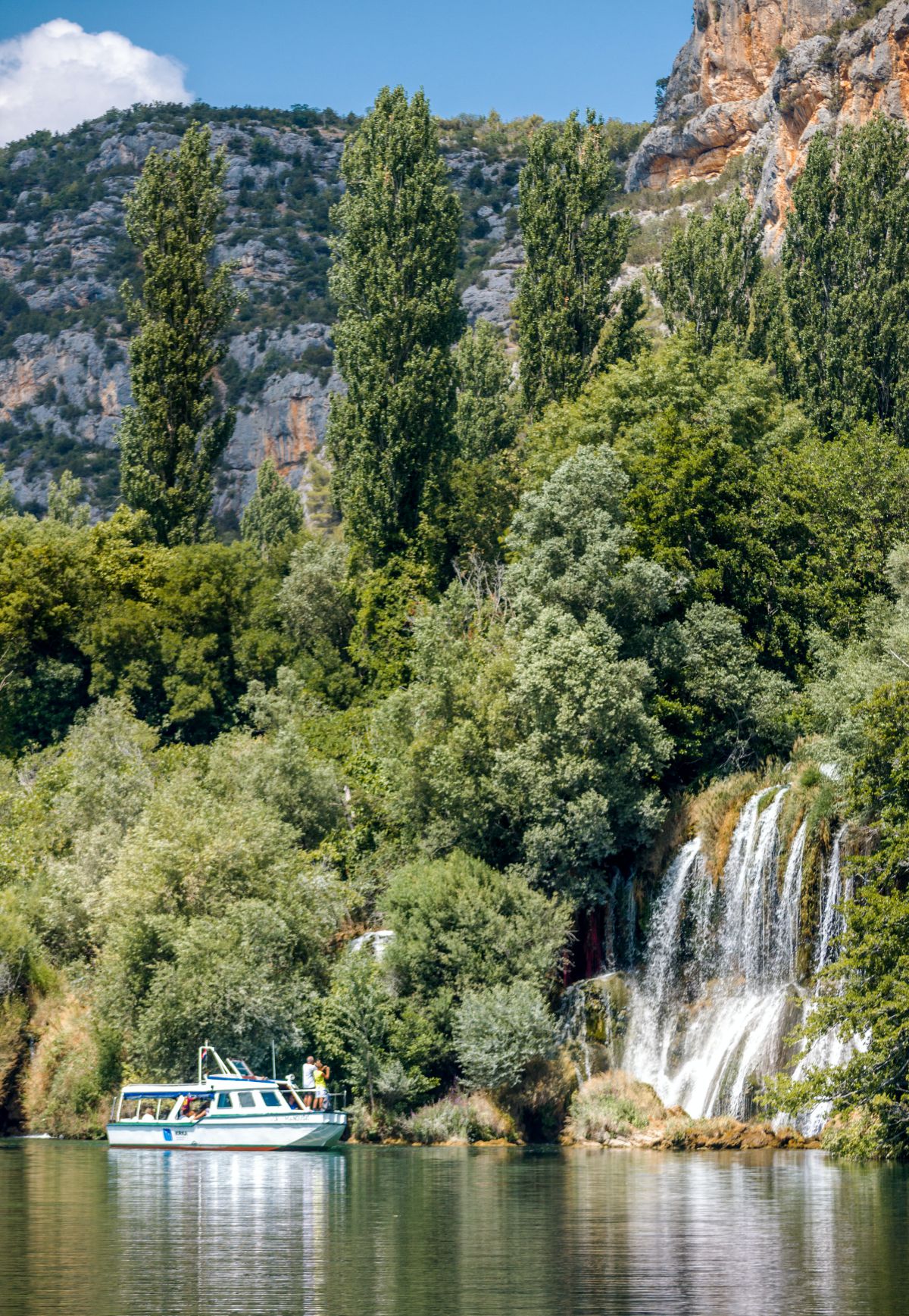
Further along the river, Roški slap reveals another face of the park. Unlike the broad and famous scenery of Skradinski buk, Roški slap feels more spread out, more layered.
Here, the water moves through smaller cascades, quiet channels, and natural formations often described as necklaces. The visit feels less about one spectacular viewpoint and more about atmosphere. The river slows down, the vegetation comes close, and the old mills create a sense of local memory.
Roški slap is important because it shows that Krka cannot be reduced to a single image. It is not only the famous waterfall seen in photographs. It is a sequence of places, each with its own rhythm.

A Protected Beauty That Deserves Respect
Krka’s beauty is easy to admire, but it is also fragile. The tufa barriers, river ecosystems, plants, birds, and quiet details that make the park so special all depend on careful protection.
This is why visiting Krka today also means understanding that nature is not simply a backdrop for travel photos. Swimming at Skradinski buk is no longer allowed, and this decision reflects something essential about the park. Krka must be experienced with respect.
The best way to enjoy it is not to take possession of the place, but to move through it gently.
The wooden walkways, marked trails, boat connections, and viewpoints help visitors discover the park while preserving its natural balance. They also remind us that some landscapes are most powerful when we allow them to remain themselves.

Why Krka Stays With You
Krka National Park stays in memory because it offers more than beauty.
Of course, there are waterfalls. There are clear streams, green reflections, wooden paths, islands, mills, and viewpoints. But what remains after the visit is often something more subtle: the rhythm of the river, the coolness of the shade, the sound of water beneath your feet, and the feeling that the landscape has been moving long before you arrived and will continue long after you leave.
Krka is not only a destination to see during a journey through Dalmatia. It is a place that teaches you how water can shape stone, history, silence, and memory.
For travellers who want to experience Croatia slowly and meaningfully, Krka is one of those rare places where nature does not perform. It simply continues. And that is exactly why it feels unforgettable.