A City Best Discovered Slowly
Some cities reveal themselves all at once. Split does not.
At first, it seduces easily: the Adriatic light, the marble-like stone, the palm-lined Riva, the relaxed rhythm of Dalmatian life. For many travellers, especially those arriving in Croatia for the first time, Split looks like the perfect Mediterranean postcard. But the longer you stay, the more you realize that its beauty is not only on the surface.
It is Roman and Mediterranean, lively and timeless, urban and deeply connected to nature. It is a place where ancient walls are not sealed behind museum glass, but folded into everyday life. People meet for coffee beside imperial columns, walk through streets shaped by centuries, climb pine-covered hills above the sea, and end the day at a table where Dalmatian flavours tell their own quiet story.
During my time in Split, I discovered a city that should not be rushed. From the shaded paths of Marjan Forest Park to the living heart of Diocletian’s Palace, and from small historical details to the richness of a traditional Dalmatian meal, Split felt like a destination to be understood slowly.
And perhaps that is the real luxury of Split: not simply seeing it, but allowing it to unfold.
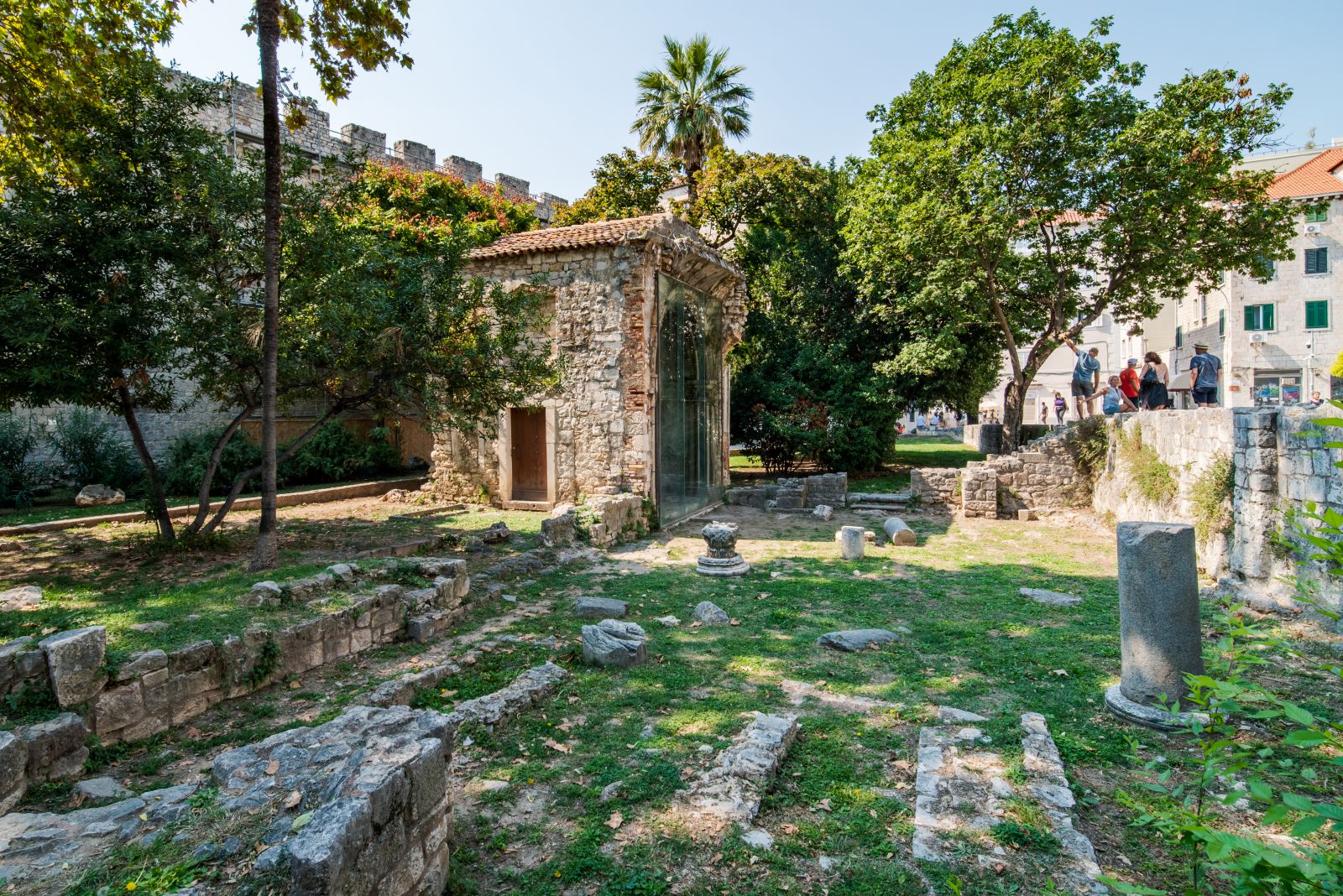
Marjan Forest Park: Where Split Breathes Above the Adriatic
Before entering the old heart of Split, I first saw the city from above.
Marjan Forest Park rises just beyond the centre, close enough to reach on foot, yet far enough to change the atmosphere completely. Within minutes, the sound of the city softens. Stone paths lead between pine trees, sea air moves through the shade, and the Adriatic begins to appear between branches like a promise.
From Marjan, Split reveals itself gradually. One viewpoint opens toward red rooftops and the harbour. Another looks across the deep blue sea toward the islands. As the trail rises, the city begins to feel wider, calmer, almost suspended between land and sea.
What makes Marjan so special is this constant dialogue between nature and the city. It is not an escape from Split, but another way of understanding it. Here, the Mediterranean does not need to announce itself loudly. It is in the scent of pine, the brightness of the stone, the rhythm of footsteps, and the view that makes you stop speaking for a moment.
For travellers looking for more than a quick visit, Marjan offers one of the most beautiful ways to experience Split, Croatia. It shows the city’s quieter side: greener, softer, and deeply local. It is the kind of place that reminds you why slow travel matters.

Diocletian’s Palace: Where Roman History Still Lives
After seeing Split from above, entering Diocletian’s Palace felt like stepping directly into the city’s living memory.
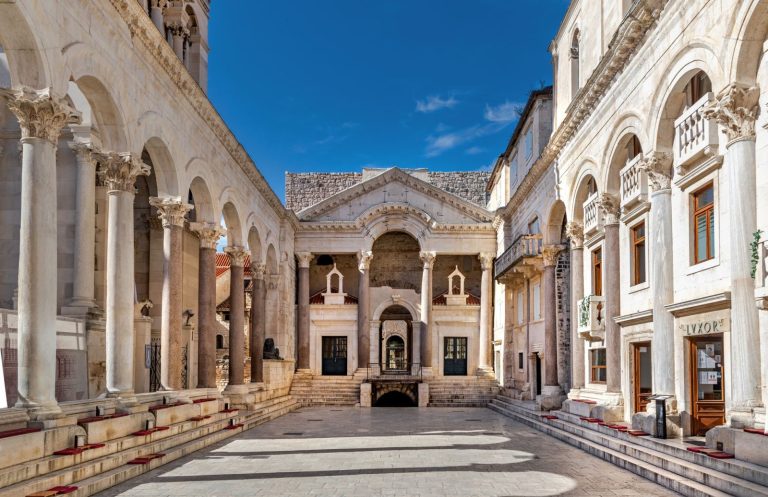
Built between the late 3rd and early 4th centuries AD for the Roman emperor Diocletian, the palace was originally designed as both an imperial residence and a fortified complex by the sea. Today, it forms the historic heart of Split and is one of the most extraordinary Roman sites in Croatia.
But what makes Diocletian’s Palace so fascinating is not only its age or grandeur. It is the fact that it is still alive.
This is not a monument you simply visit. It is a place people still move through, work in, live in, and gather around. Cafés sit beside ancient walls. Laundry hangs above narrow stone streets. Music drifts through squares where emperors once walked. The past is not separate from the present here; it is woven into daily life.
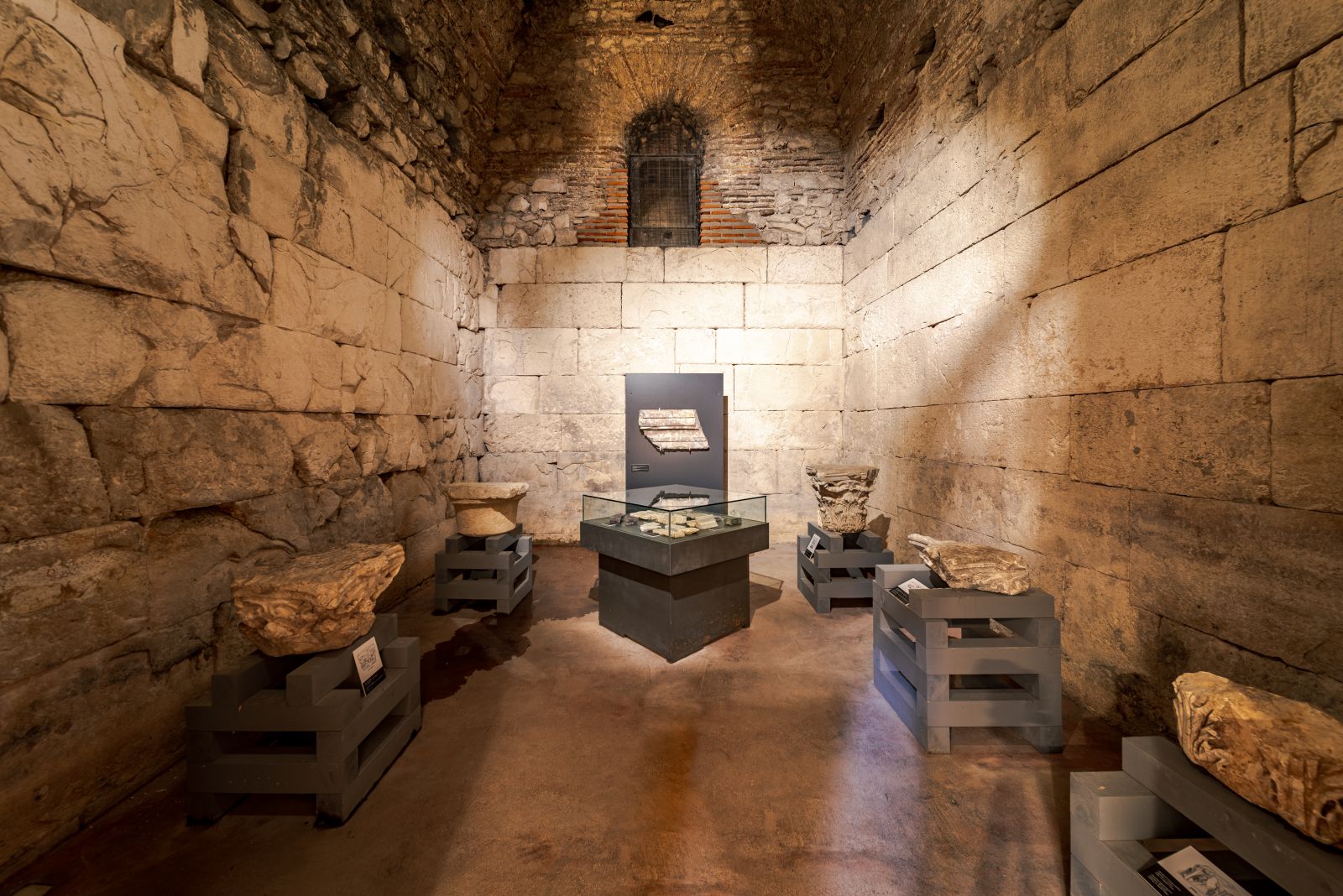
During my visit, I discovered how the palace was once organized around four main gates, each opening toward a different side of the city. The Golden Gate marked the northern entrance, once connected to the road toward Salona, while the southern gate opened toward the sea. Inside, the Peristyle still carries the atmosphere of imperial power, standing as one of the most symbolic spaces in the palace.
Nearby, the former imperial mausoleum became the Cathedral of Saint Domnius, adding another layer to the story of Split. Roman foundations, medieval transformations, Gothic and Renaissance details, narrow streets, later palaces, and the bell tower rising above the old town all exist together.
This is why Split feels so different from many historic cities. Its history is not frozen. It breathes. It has been adapted, inherited, used, loved, and crossed every day for centuries.

Small Stories Behind the Great Stones
What stayed with me most was not only the grandeur of Diocletian’s Palace, but the smaller stories hidden around it.
Just outside the Golden Gate stands the impressive statue of Gregory of Nin, created by the Croatian sculptor Ivan Meštrović. The statue has become one of Split’s familiar symbols, especially because of the tradition of touching its polished toe for good luck. It is one of those simple rituals travellers remember: part history, part superstition, part city charm.
As a French visitor, I was especially intrigued by Meštrović’s connection with France. Before becoming one of Croatia’s most important sculptors, he spent time in Paris and was influenced by Auguste Rodin, whose work helped shape modern sculpture. Standing in front of Gregory of Nin, this detail created an unexpected bridge between Croatia and France, between a Croatian historical figure and a wider European artistic story.
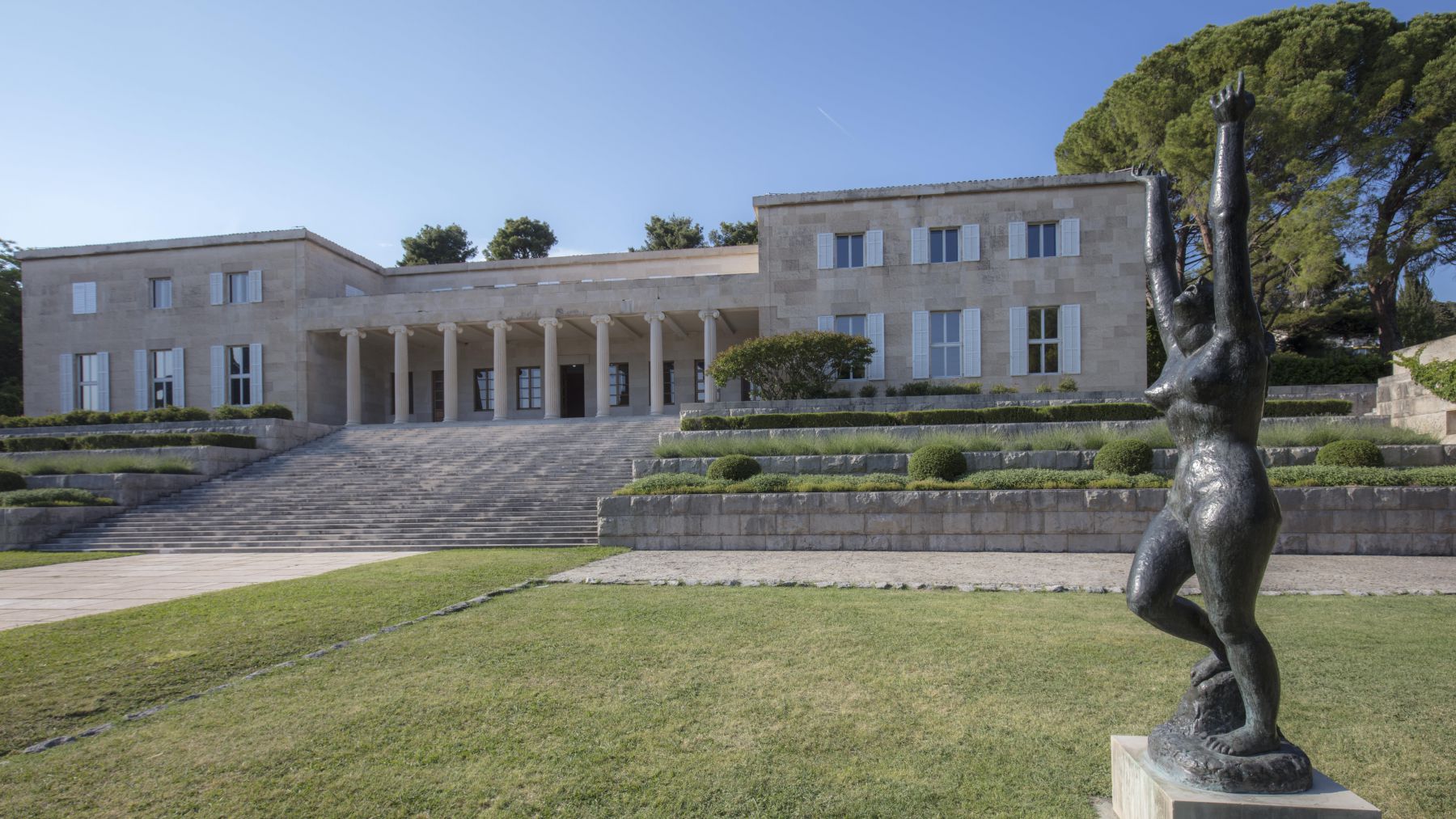
Another detail that remained with me was the story of one of Split’s early modern hospitals, connected to the Napoleonic period. It reminded me that Split is not impressive only because of its Roman past. Every century has left something behind.
This is what makes the city so rewarding for curious travellers. Split is not just one story. It is many stories, layered in stone, sea, art, memory, and everyday life.

Dalmatian Cuisine: When Split Tells Its Story at the Table
After walking through Split’s landscapes and history, the city reveals itself in another way: through its flavours.
Dalmatian cuisine has the rare ability to feel both simple and generous. It is shaped by the sea, the land, olive oil, herbs, wine, and a deep respect for tradition. It is not food designed to impress quickly. It is food that asks for time.
One of the most emblematic dishes is pašticada, a slow-cooked Dalmatian specialty often served with homemade gnocchi. Rich, tender, and full of character, it reflects a different rhythm of life, one where time matters and every flavour is allowed to develop slowly.
Tasting pašticada feels like entering another side of Dalmatia: more intimate, more rooted, and deeply connected to family traditions. It is a dish that belongs to celebration, memory, and hospitality. Paired with a local Croatian wine, it becomes more than a meal. It becomes a quiet moment of discovery.
After the views of Marjan and the stories of Diocletian’s Palace, Dalmatian gastronomy offers one final layer of Split: warm, generous, and quietly memorable.
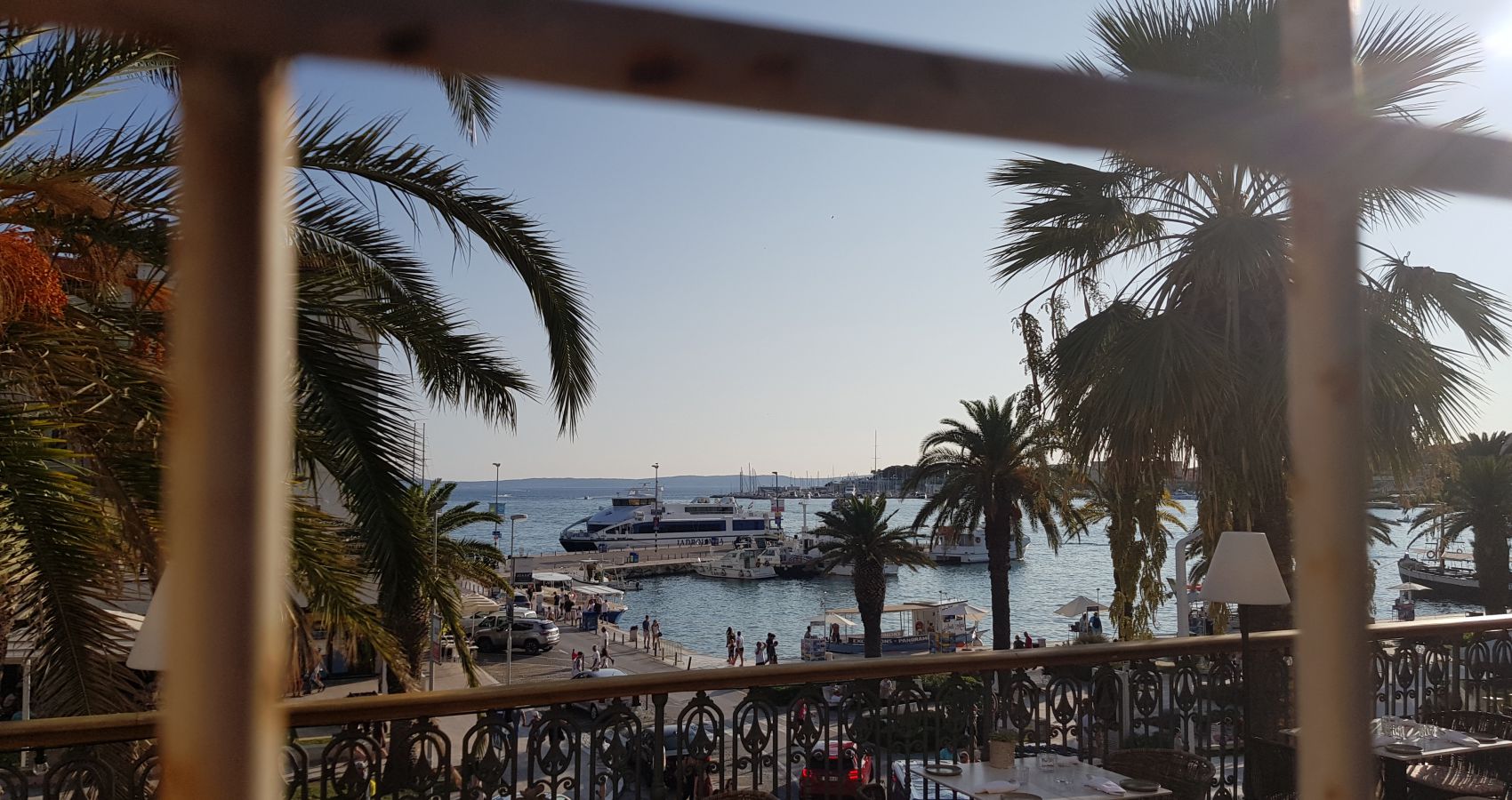
Why Split Is More Than a Stop on a Croatia Itinerary
For many American travellers planning a trip to Croatia, Split is often seen as a gateway: a place to begin an island-hopping journey, board a yacht, or continue toward Hvar, Brač, Korčula, Dubrovnik, or the national parks.
But Split deserves more than a quick stop.
It is one of those Mediterranean cities where the real experience comes from slowing down. You need time to climb Marjan in the morning light, walk through Diocletian’s Palace without rushing, notice the details around the Golden Gate, sit for coffee on a stone square, taste traditional Dalmatian cuisine, and understand how naturally the city combines history, nature, and everyday pleasure.
This is also why Split works so beautifully in a tailor-made Croatia journey. With the right planning, it can become much more than a destination on a map. It can become a layered experience: Roman heritage, coastal walks, private guiding, local food, island connections, wine, art, and that unmistakable Dalmatian rhythm.
For travellers who want Croatia to feel personal rather than predictable, CROATIAN ATTRACTIONS, a Croatia-based DMC, designs private and custom-made journeys that reveal this deeper side of the country. Split is one of the places where that approach matters most, because the city rewards those who look beyond the obvious.
The postcard version of Split is beautiful.
But the real Split — the one that stays with you — is found slowly: above the sea, inside ancient walls, in small stories, and at the Dalmatian table.