A refined introduction to Istria’s wine culture, where history, terroir, and taste come together in the heart of Pula.
There are places where you learn about wine, and then there are places where you begin to understand it.
The Istria Wine Museum in Pula belongs firmly to the latter.
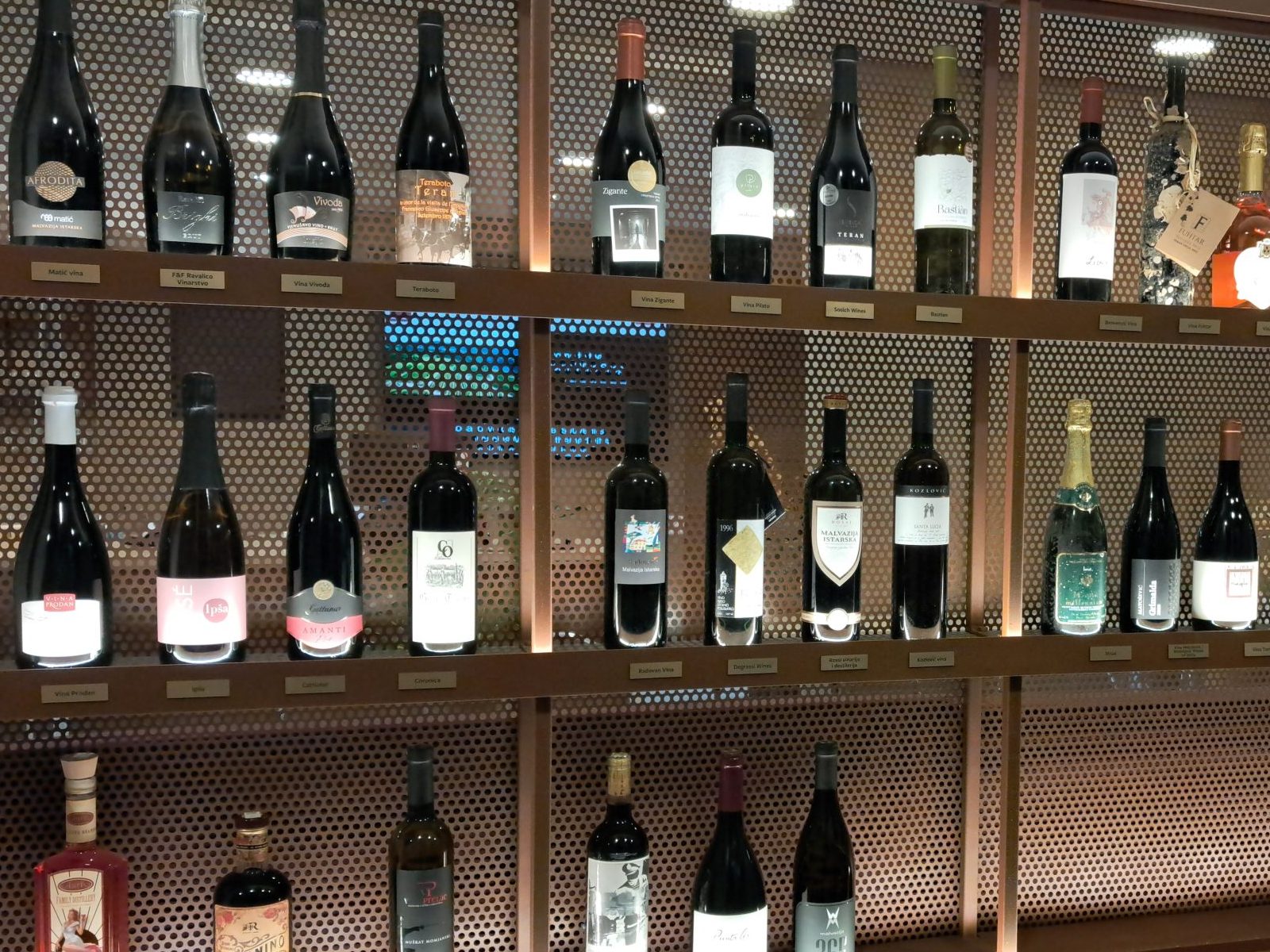
Opened in July 2025 on the elegant Sergijevaca Street, inside a former bank building, this quietly ambitious space does not overwhelm with grandeur. Instead, it draws you in slowly, like a well-structured wine, layer by layer, story by story. What unfolds is not just an exhibition, but a narrative of land, climate, and human persistence that has shaped one of Europe’s most intriguing, still underappreciated wine regions.
To step inside is, quite literally, to uncork Istria.
A Region Defined by Contrast and Character
But to appreciate the museum, one must first understand the region it represents.
Istria is not a loud wine destination. It does not compete with Bordeaux in reputation or Tuscany in global familiarity. And yet, in many ways, it offers something more compelling: a sense of discovery.
Viticulture here dates back over two millennia, with vines believed to have arrived as early as the 6th century BC. Layers of influence, from Roman refinement to Austro-Hungarian precision and Italian elegance, have left subtle but lasting imprints on how wine is grown and understood in this region.
The real transformation, however, came in the 1990s. As large state-run systems dissolved, a new generation of independent winemakers emerged. Smaller, more focused, and often more daring, they shifted the emphasis from volume to quality, from uniformity to terroir.
Today, Istria stands as one of Croatia’s most dynamic wine regions, compact in size but remarkably expressive.
Its character is shaped by contrast.
Mediterranean warmth is tempered by Alpine freshness. Sea breezes meet cool night air. The result is wines with clarity, structure, and a certain tension that keeps them alive on the palate.

Terroir You Can Taste, Not Just Describe
Then there is the soil.
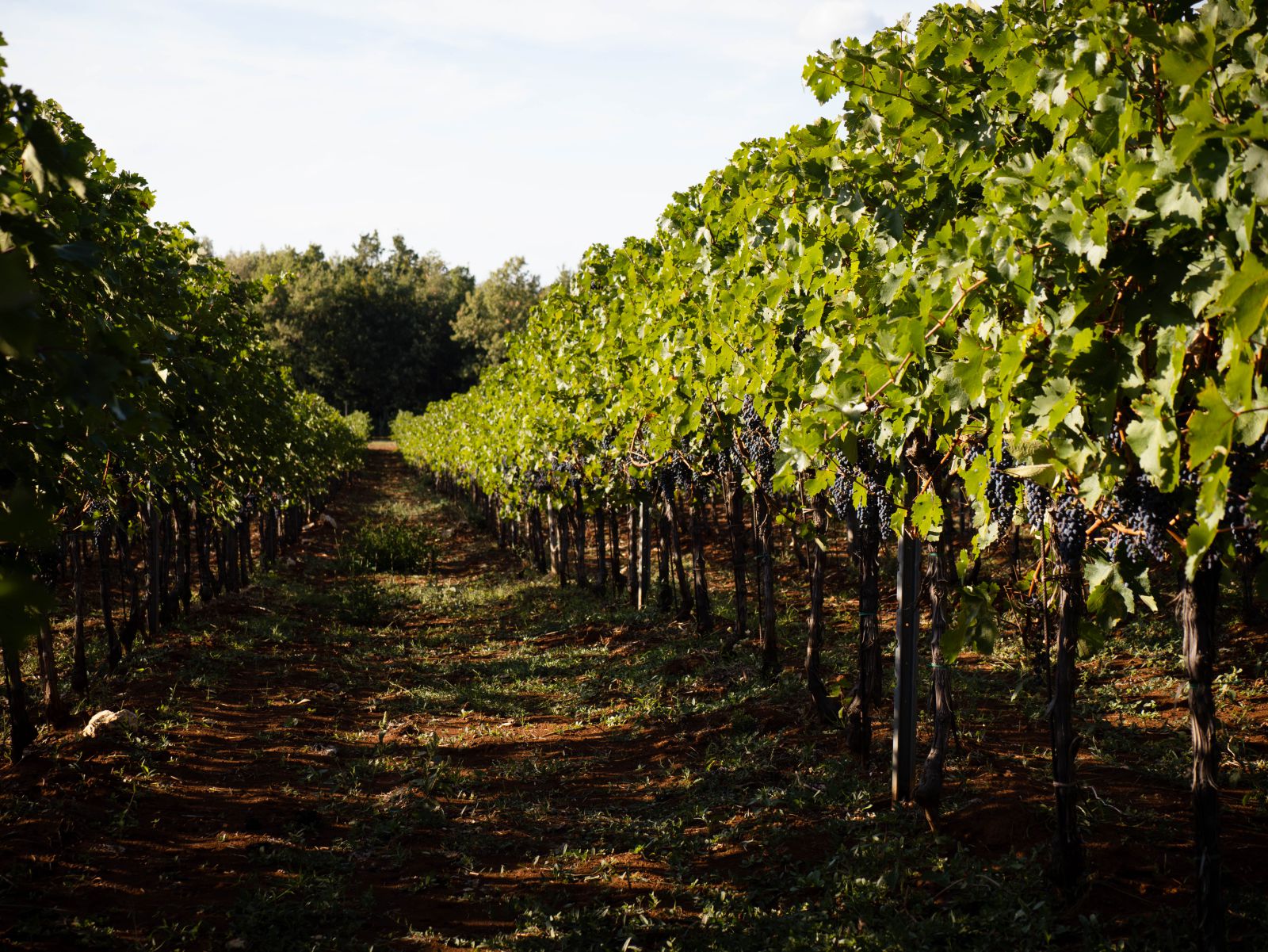
Red Istria, near the coast, with its iron-rich terra rossa, gives depth and strength to red wines. Grey Istria, with its flysch soils, produces aromatic whites with precision and lift. Inland, White Istria’s limestone terrain creates wines of elegance and freshness.
This diversity is not theoretical; it is something you can taste.
And this is precisely where the museum excels.
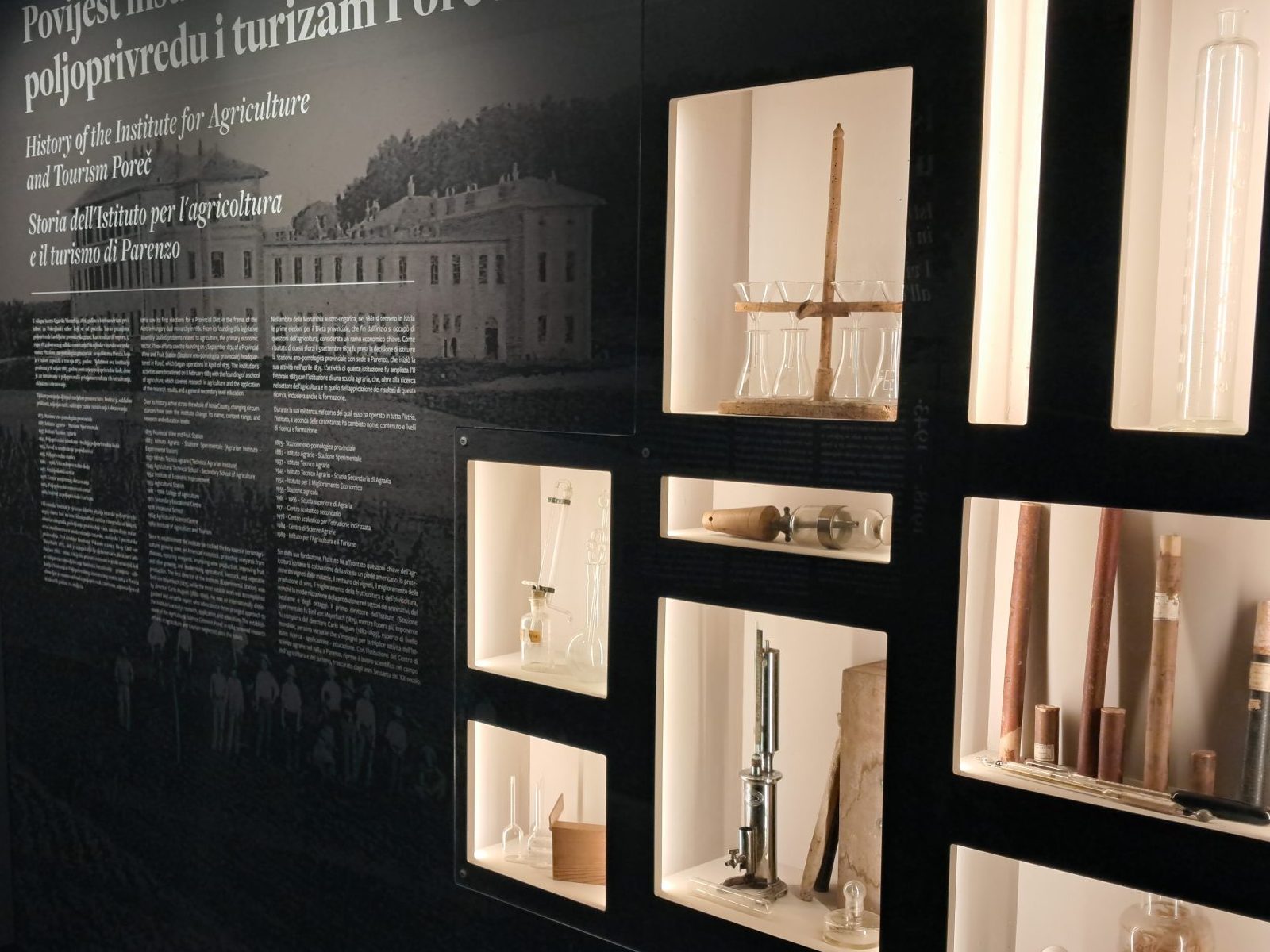
Rather than presenting wine as an abstract concept, it grounds it in experience. The journey begins with contemporary winemaking, then moves backward and forward through time, weaving together geology, climate, grape varieties, and human stories.
You encounter Roman glassware and amphorae, quiet reminders that wine here was never a trend, but a continuity.
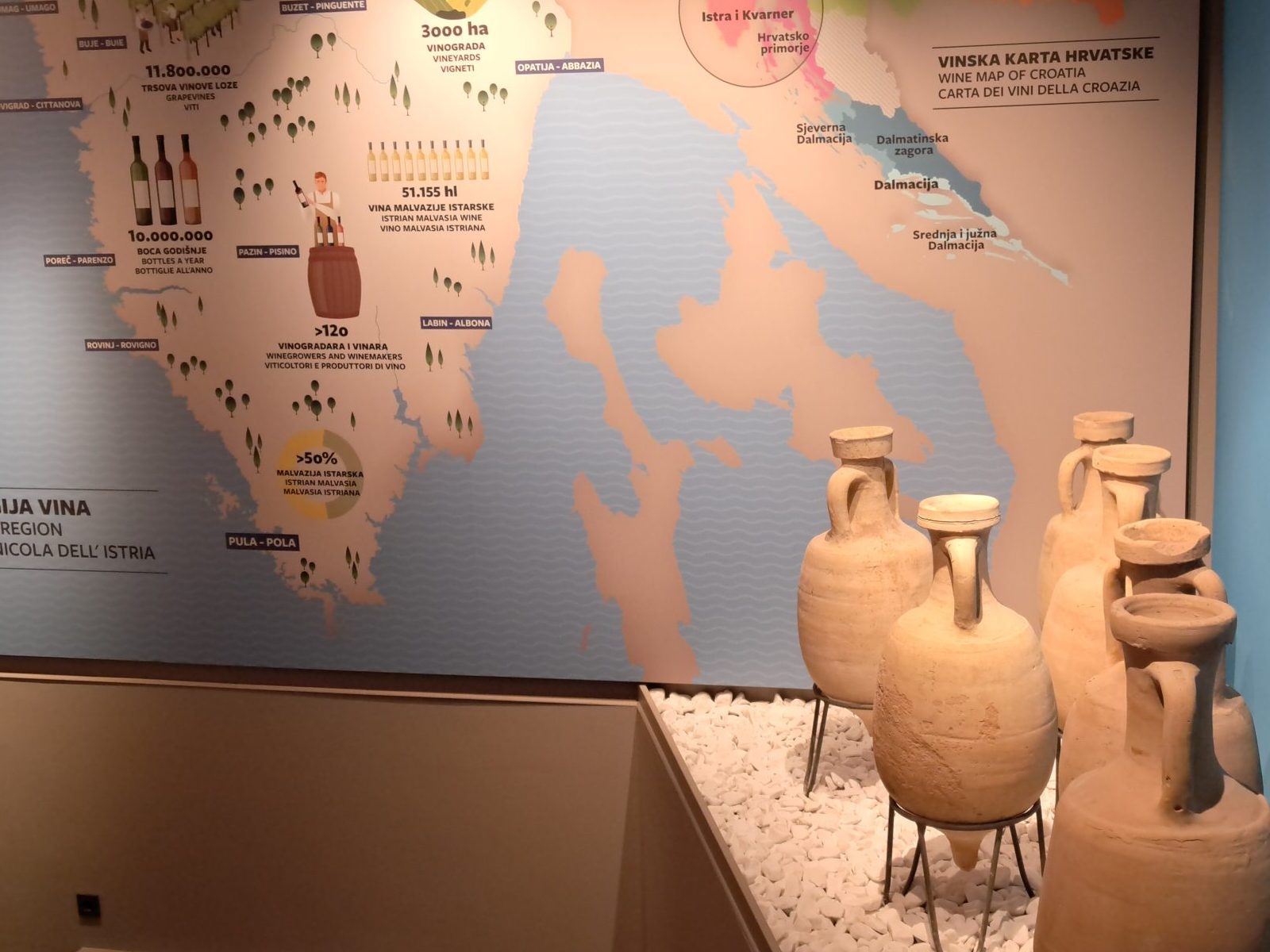
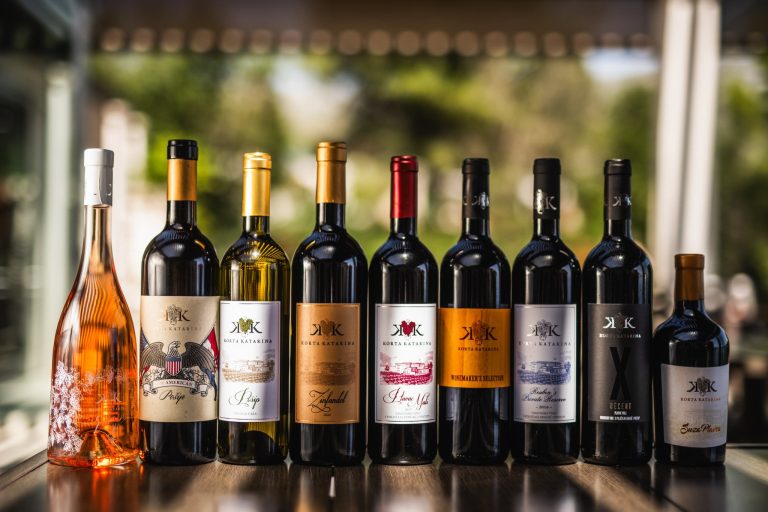
You begin to understand Malvazija Istarska not just as a grape, but as a signature of place: fresh, floral, with subtle almond notes that echo the landscape itself. You discover Teran, darker and more assertive, shaped by the same land but expressing a completely different mood.
There is something deeply satisfying in this progression, from knowledge to recognition.
One of the most engaging moments comes not through text, but through the senses. The museum invites you to smell, to identify, to question. Aromas become clues. Wine becomes language.
This is where the experience shifts, from observation to participation.
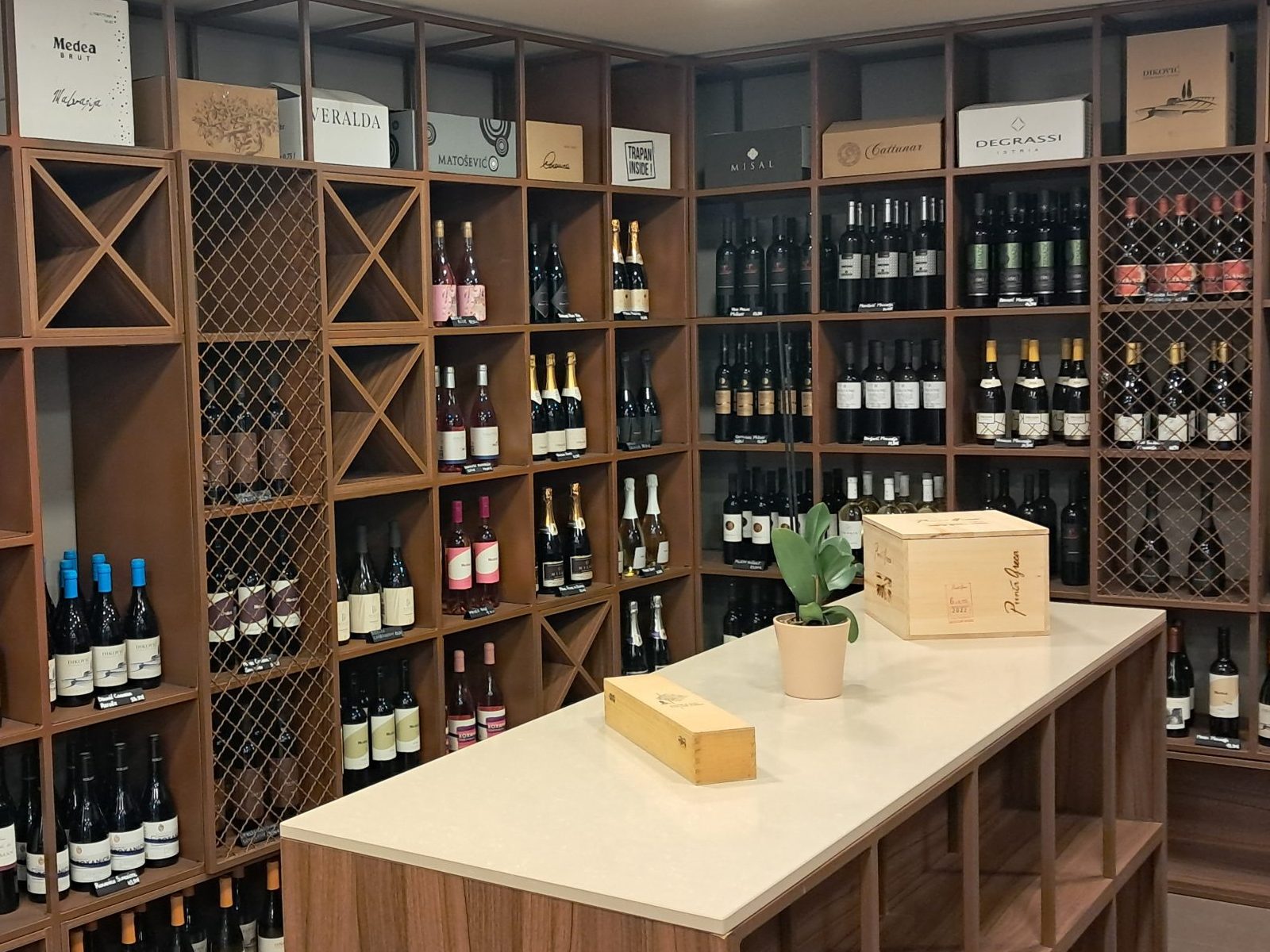
The visit concludes, as it should, with a tasting. But this is not an afterthought. It is the culmination of everything you have just learned, a moment where theory dissolves into pleasure.
In a city like Pula, known for its Roman amphitheatre and coastal energy, the museum offers a different kind of attraction: quieter, more introspective, and unexpectedly refined.
It is also where CROATIAN ATTRACTIONS, as a Croatia DMC, can elevate the experience beyond the museum walls. Because understanding Istrian wine in isolation is only the beginning. The real depth comes when it is paired with vineyard visits, private tastings, truffle experiences, and those inland estates where time seems to move at a different pace.
That is where knowledge becomes memory.
The Istria Wine Museum is, in many ways, a perfect starting point. Not because it tells you everything, but because it teaches you how to look, taste, and think differently about what follows.
And in Istria, what follows is always worth lingering for.