Every summer, Croatia attracts millions of visitors in search of sunshine and the Adriatic Sea. But far from the country’s busiest destinations, Opatija has chosen to focus on elegance and authenticity. To introduce visitors to this former imperial seaside resort, the local Tourist Board invited a group of French travellers for a guided tour. The aim: to tell the story of a city that is meant to be experienced as much as it is visited.
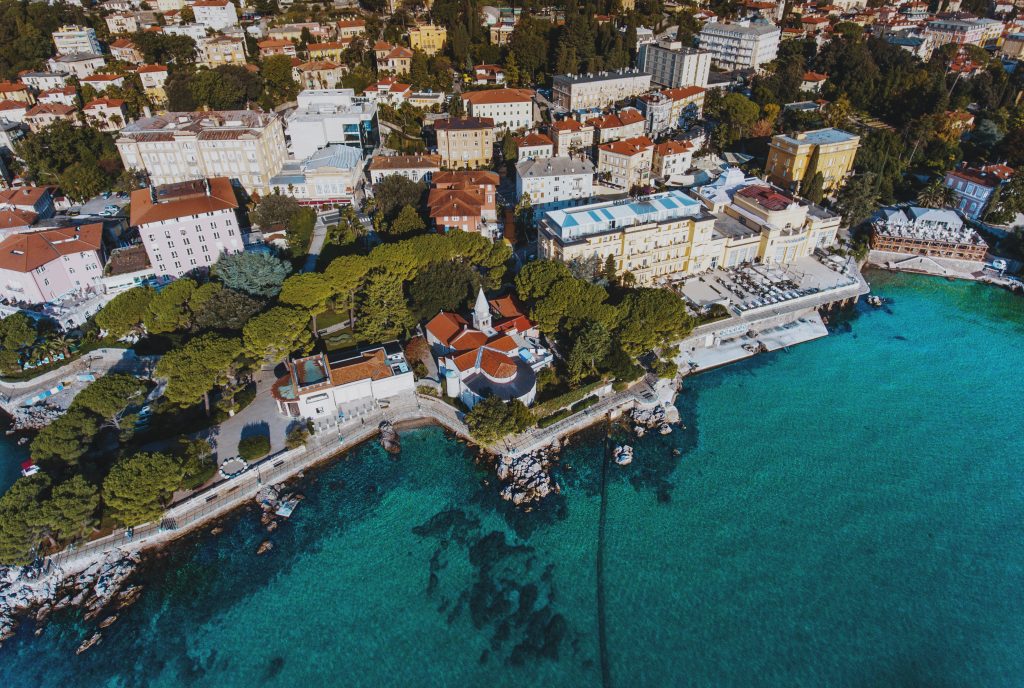
Waking up to the sounds of Croatian music, enjoying a good coffee — a true institution in Croatia — and putting on a comfortable pair of shoes. That is all you need to set off and discover Opatija. From Zagreb, the bus journey takes just over two hours. Several companies operate this route, offering a trip through mountains, forests and glimpses of the Adriatic Sea along the way. If, like us, the previous evening ended with a few glasses of rakija, the journey is the perfect opportunity to catch up on some sleep. Otherwise, take the time to admire the scenery and learn your first Croatian words. Once you arrive, it is hard not to feel the unique blend of serenity and elegance that fills the streets of Opatija.
A walk through the stories of Opatija
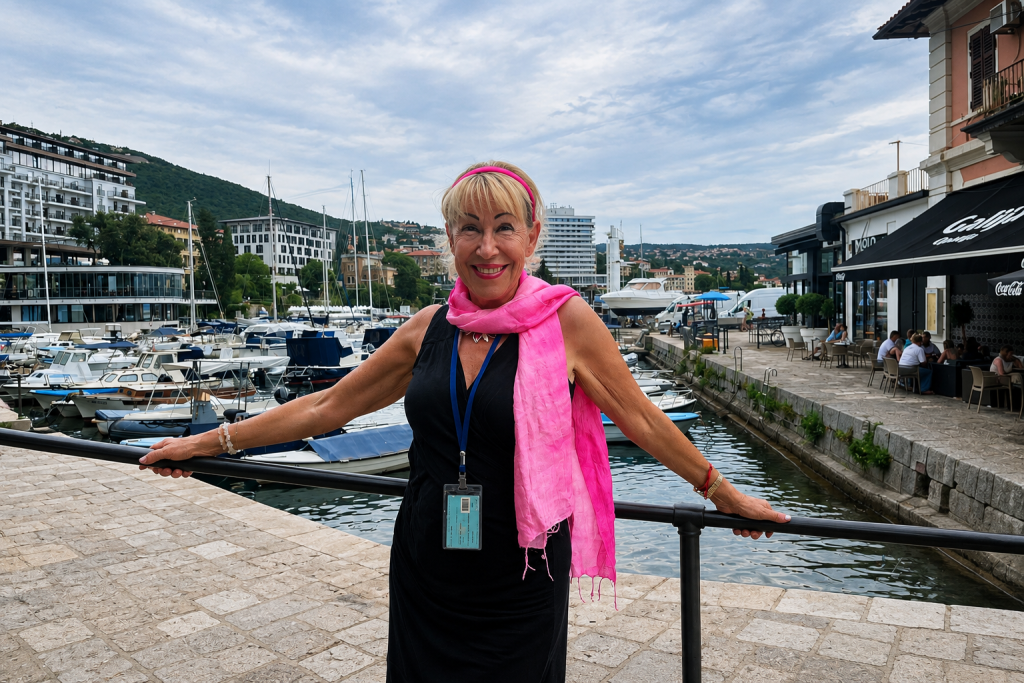
To truly understand Opatija, you have to let yourself be guided. That morning, a pink scarf immediately catches our attention. It is the one we follow through the elegant streets of the town, worn by our guide, Mrs Đurđica Kovačić. With her infectious enthusiasm and fascinating stories, she opens the doors to the history of this seaside resort with its unique charm.
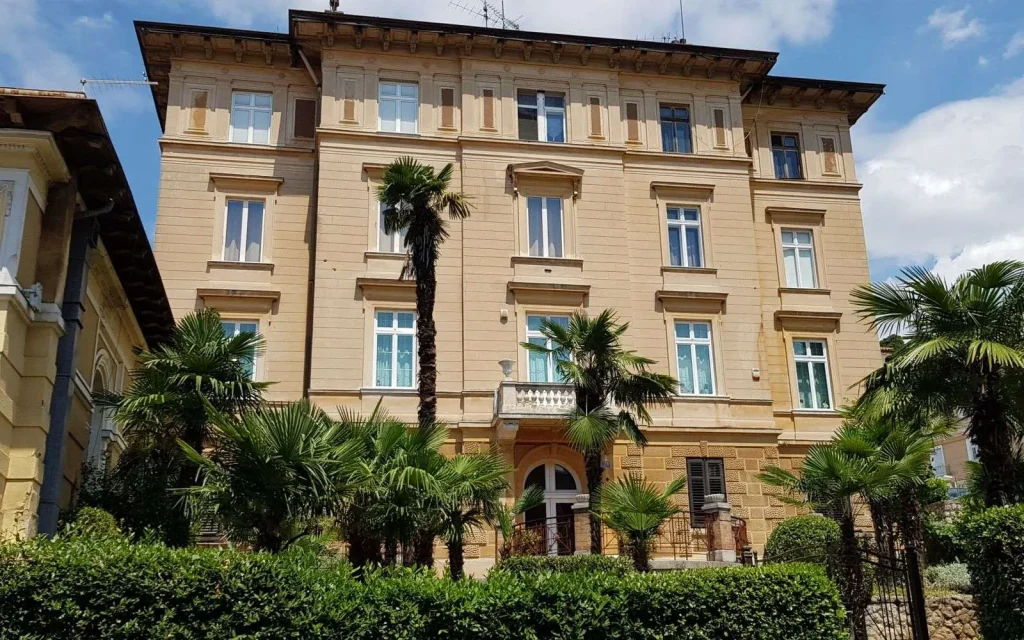
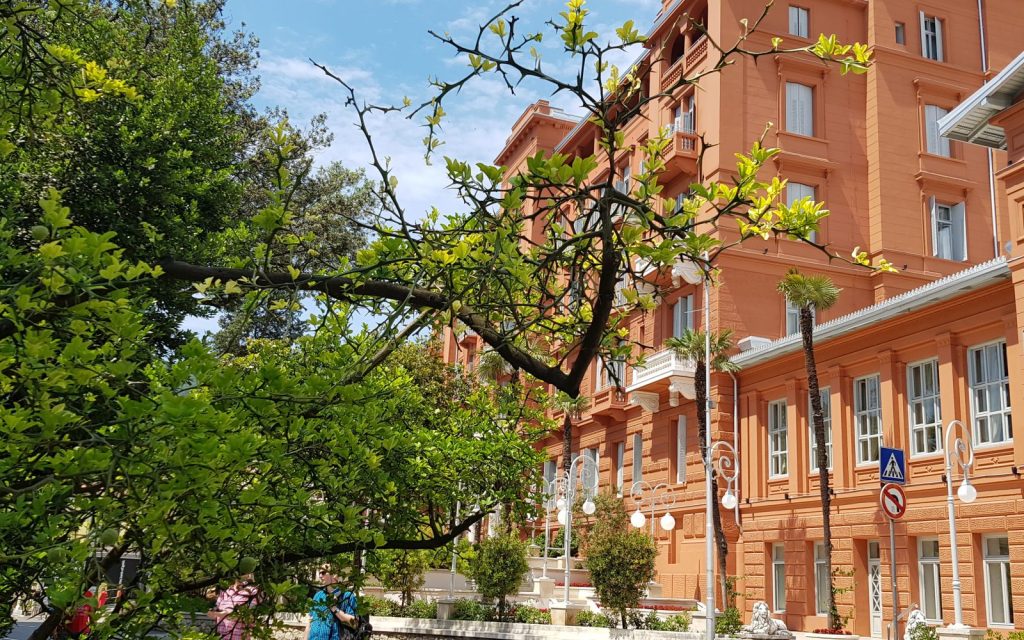
Unlike most Croatian towns, whose origins date back to Antiquity or the Middle Ages, Opatija is a relatively young city. At the end of the 19th century, there was little more than an old Benedictine monastery here — which actually gave the city its name, as Opatija means “abbey” — along with a few modest fishermen’s houses.
Everything changed with the arrival of the railway connecting the Austro-Hungarian Empire to the Adriatic coast. Austrians soon discovered the area’s exceptional climate, much milder than that of Vienna. The first hotels began to appear. Men built the grand palaces, while women created posters, advertisements and promotional campaigns that would introduce this new destination throughout the empire. A communication strategy ahead of its time, transforming Opatija into a prestigious seaside resort.
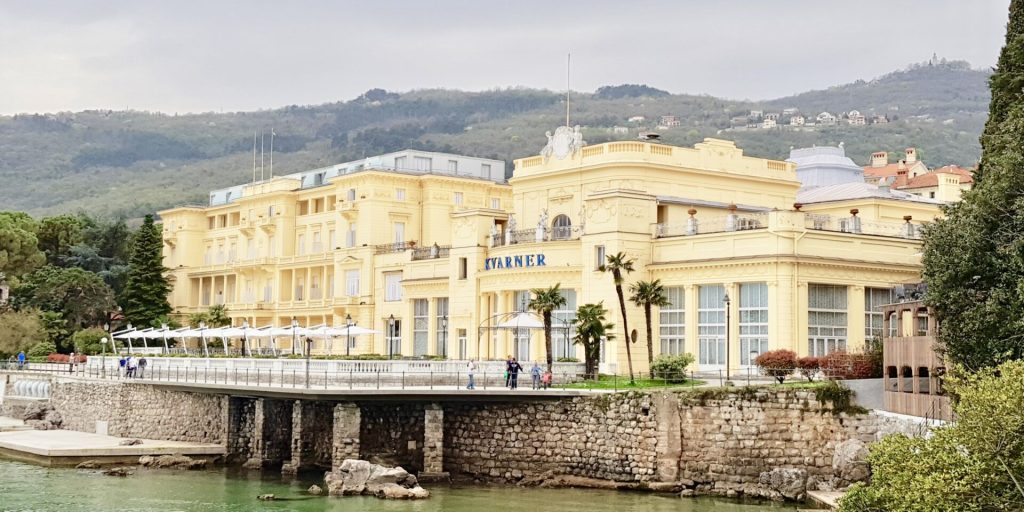
Royal figures quickly fell under the spell of the town. During our visit, we follow in the footsteps of Emperor Franz Joseph, who regularly stayed in Opatija. According to local legend, he even met his mistress there. Meanwhile, Empress Sissi and many members of the aristocracy came to enjoy this gentle way of life. If the walls of these palaces could speak, they would certainly reveal some of the juiciest stories of European aristocracy. Fortunately, our guide already knows a few of them… but we will leave you the pleasure of discovering them for yourself when you visit.
A city that chooses quality over quantity
At first glance, Opatija surprises visitors. No ancient fortress, no medieval walls and no Roman ruins. Here, heritage is more subtle and refined. “Opatija prefers quality over quantity,” explains our fantastic guide.
This special atmosphere is also shaped by the city’s geography. Although located in northern Croatia, Opatija enjoys a remarkable microclimate. The Učka mountain range, reaching nearly 1,400 metres in height, protects the town from cold northern winds, while the islands of Krk and Cres soften the maritime influences. The result: in January, the average temperature is around 7°C. Frost is almost unheard of here, and in summer the heat remains pleasant, far from the sometimes overwhelming temperatures found in Dalmatia.
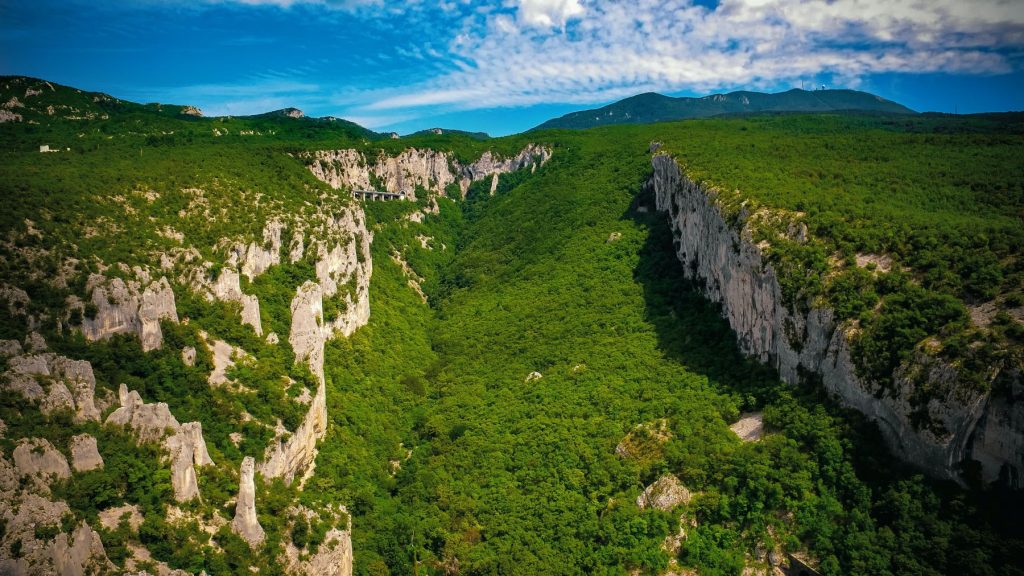
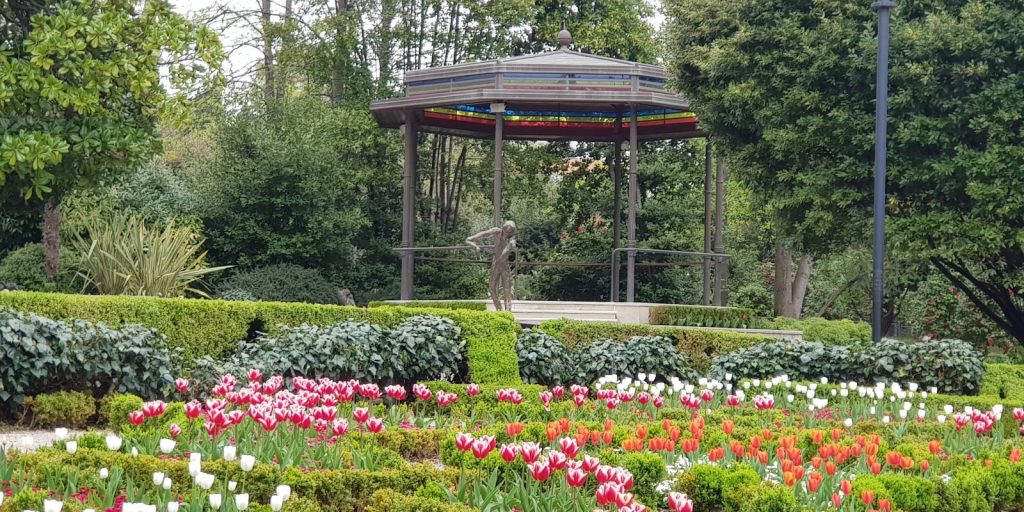
And whatever you do, don’t tell the locals that their climate is humid! The region’s many evergreen trees do not owe their lush appearance to rainfall, but to the numerous underground springs that feed the area. Thanks to these exceptional conditions, Opatija is home to an almost exotic variety of vegetation: camellias, magnolias, palm trees, banana trees and subtropical species all blend into its perfectly maintained gardens.
The promenade where history unfolds with every step
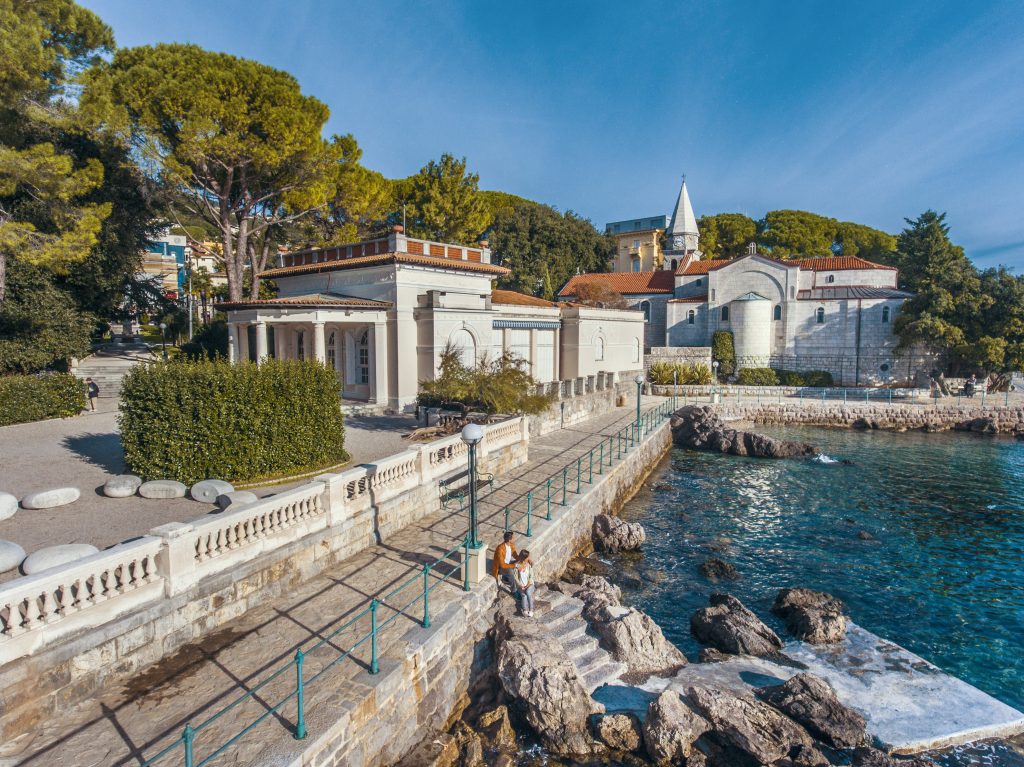
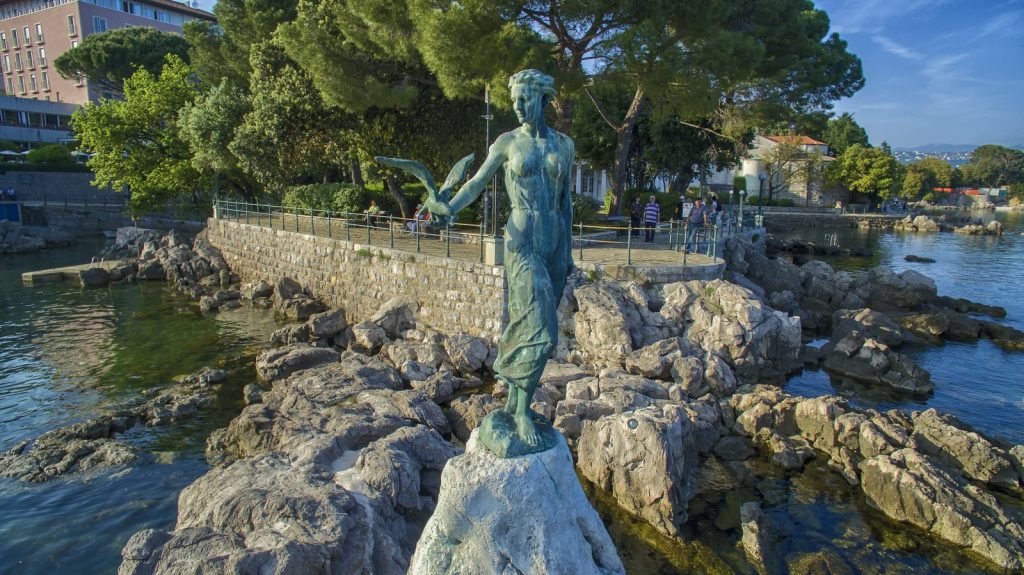
A visit to Opatija would not be complete without walking along the famous Franz Joseph Promenade, a ten-kilometre coastal promenade stretching along the Adriatic Sea.
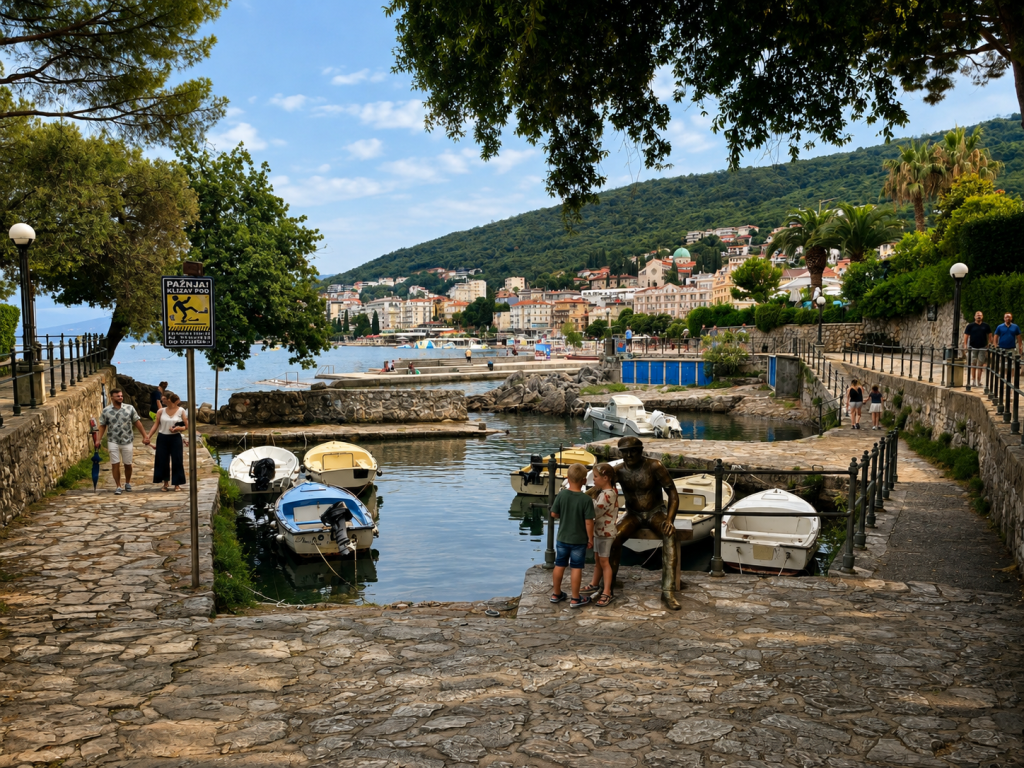
The route passes Belle Époque villas and flower-filled gardens. But appearances can be deceiving: some plants, once used to absorb lead from car pollution, are toxic. It is better to admire them than to touch them. A little further along, an impressive evergreen oak, several centuries old and once valued for shipbuilding, watches over the promenade.
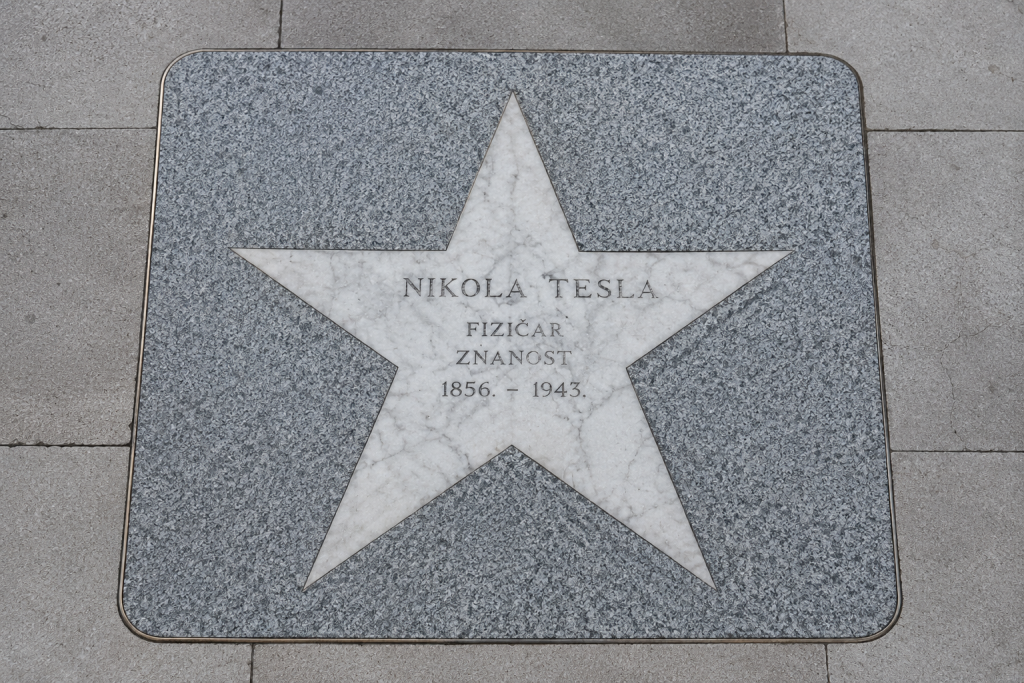
Today, part of the walkway has become a kind of Croatian “Walk of Fame”, featuring a star-studded path embedded in the ground that celebrates some of the country’s most remarkable figures. Athletes, scientists, artists, and filmmakers are honored here, including iconic names such as Luka Modrić and Nikola Tesla. As you stroll along this unique tribute, the seagulls appear to be the true residents of the place, accompanying your walk, flying above the terraces, and constantly reminding you that the sea is never far away.
A break with your feet in the water
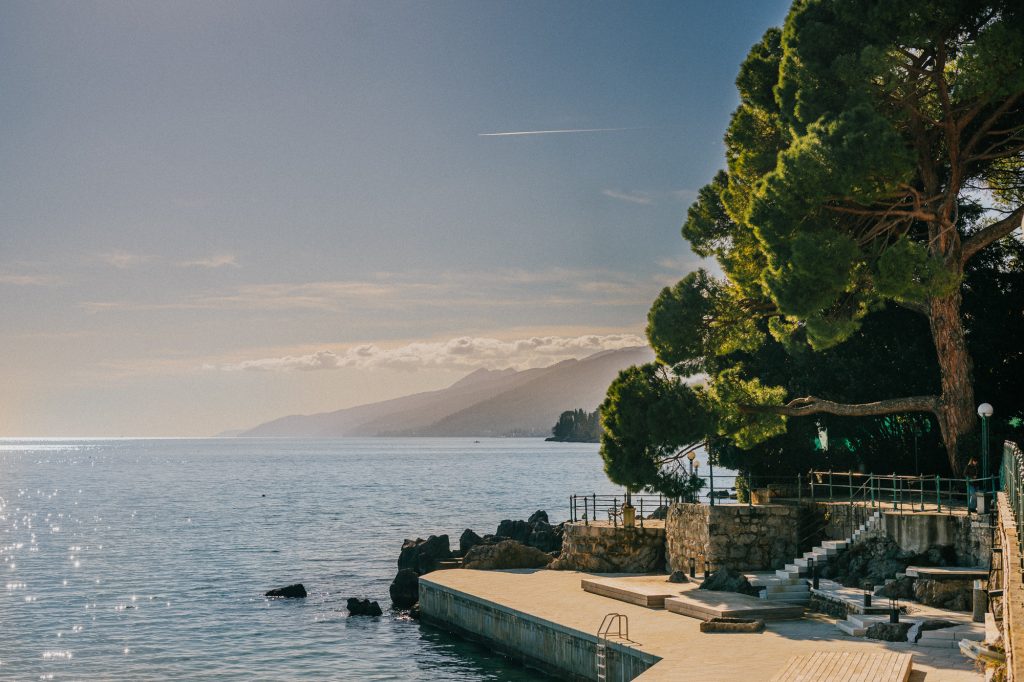
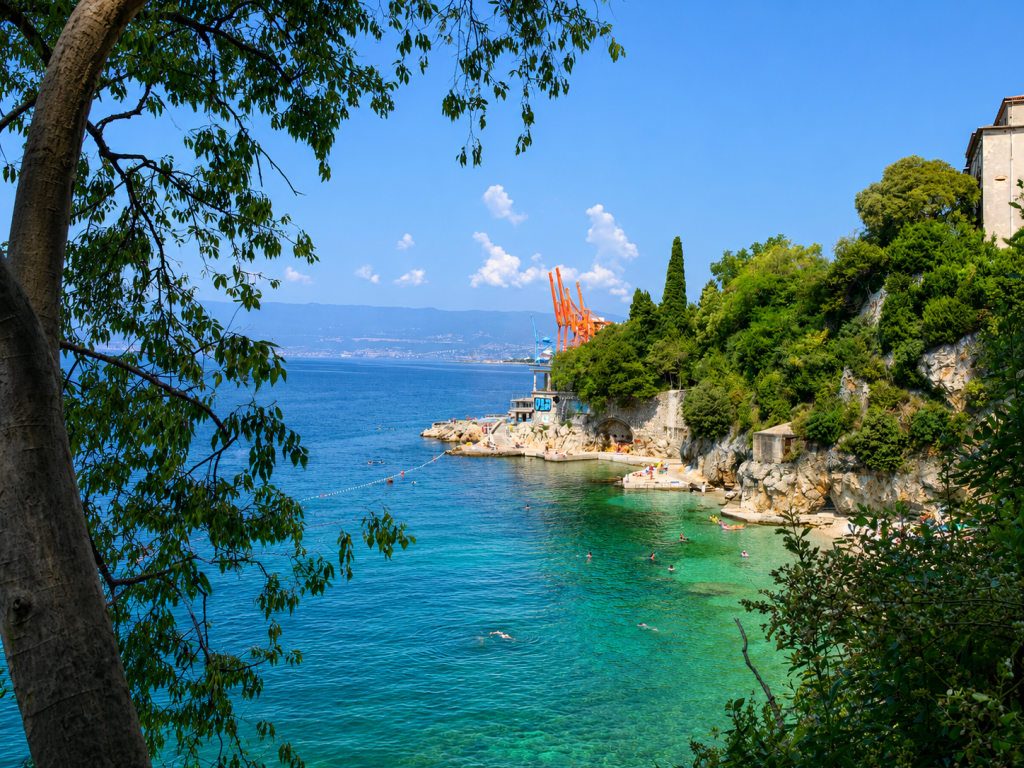
In Opatija, all beaches are freely accessible. Some are equipped with sun loungers and umbrellas, while others remain completely untouched. Cliffs, pebbles, sand or small hidden coves: everyone can find their perfect spot. Having tested them ourselves, they are simply fantastic!
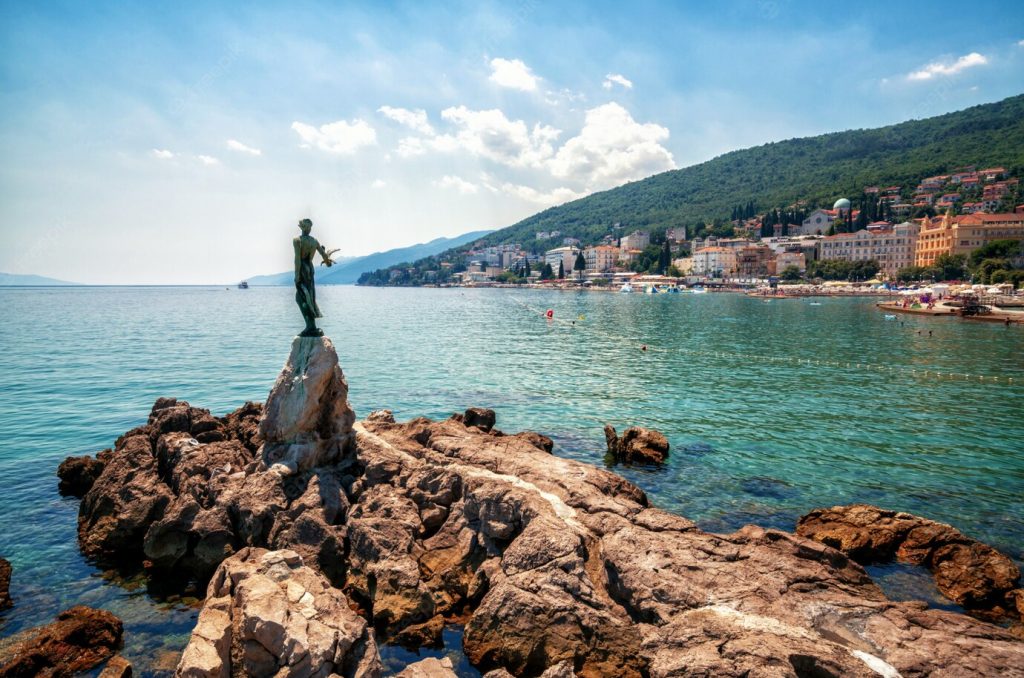
After a swim, it is hard to resist the many terraces and restaurants along the seafront. The meal quickly becomes another moment of sharing: over a pizza or grilled fish, we look back on the tour, exchanges favourite anecdotes and realise that our guide’s stories have completely changed the way we see the city.
Two neighbouring cities, two different personalities
Just a few kilometres away, Rijeka offers a completely different atmosphere.
European Capital of Culture in 2020, Croatia’s third-largest city fully embraces its industrial and cosmopolitan identity. Built between mountains and sea, it has even gained new land along the Adriatic in order to expand its port, now one of the country’s most important. Concerts, exhibitions, museums and a lively nightlife contrast with Opatija’s sophisticated calm. The two cities complement each other perfectly: one invites you to slow down, while the other bursts with energy.
A destination best discovered with those who know it best
Opatija does not simply tell its history — it brings it back to life. Every year, RetrOpatija transforms the town into a real time machine, with vintage outfits, music from the 1950s to the 2000s, and a festive atmosphere.
Because Opatija is one of those places that must be told as much as it must be visited. Behind every villa lies a story, behind every hotel a piece of history. Without our guide’s precious stories, we would certainly have missed much of this hidden richness.
So, if you are planning a getaway to Croatia’s northern coast, visit the Opatija Tourist Board and let yourself be guided. When the tour comes to an end and Mrs Đurđica Kovačić’s pink scarf disappears around the corner of a narrow street, you will leave with much more than beautiful landscapes: you will take with you the stories that give this elegant seaside resort its soul.